当我们于2025年向近15万名教师和教职员工推出ChatGPT for Teachers时,我们的目标是让教育工作者拥有一个安全的空间来探索AI,了解它在哪些方面有用,并帮助塑造它在教育中的使用方式。今天,我们将这项工作扩展到20个州的另外55个学校系统,将ChatGPT for Teachers带给超过10万名教育工作者和教职员工。
新的学区合作伙伴群体包括美国20个最大公立学区中的五分之一,以及全国一些最多元化的学校系统。借助这一新群体,OpenAI目前正在与30个州的100多个K-12组织合作,为超过30万名教育工作者和教职员工提供免费访问和培训。
与此同时,我们还宣布了一项覆盖16个州的数据隐私协议,这在行业内尚属首次,该协议为学区提供了一个通用框架,用于根据其学生数据隐私要求评估ChatGPT for Teachers,帮助使负责任的AI采用在学校系统中更简单、更一致。
我们的工作继续以这样的信念为指导:AI应支持学习,而非走捷径,教育工作者应保持对AI如何塑造课堂体验的控制权。本着这一精神,ChatGPT for Teachers继续仅面向管理人员、教职员工和教育工作者开放。ChatGPT for Teachers在2028年6月之前,对经过验证的美国K-12教育工作者仍为免费工具。
全国范围内的负责任采用:全国各地的ChatGPT for Teachers学区合作伙伴
将信任融入学区采用
对于学校系统而言,负责任的AI采用还需要明确的隐私保护,以及一种让学区领导者理解和管理工具使用方式的方法。
OpenAI还在扩展帮助学区负责任地采用AI的隐私基础设施。我们通过学生数据隐私联盟(在新窗口中打开)框架推出了一项覆盖16个州的全国数据隐私协议,为参与州的学区提供了一条公认的路径,无需逐学区谈判单独协议即可评估和采用ChatGPT for Teachers。这旨在满足学区和州在其已使用的隐私流程中的需求,适应州和地方要求,并使负责任采用更加容易。
目前,我们签署的通用协议覆盖16个州:伊利诺伊州、爱荷华州、缅因州、马萨诸塞州、密苏里州、内布拉斯加州、新罕布什尔州、新泽西州、纽约州、俄亥俄州、罗德岛州、田纳西州、德克萨斯州、佛蒙特州、弗吉尼亚州和华盛顿州。加利福尼亚州也由单独协议覆盖。
对于学校系统而言,负责任的AI采用不仅取决于访问权限,还取决于治理、隐私、采购和信任。这项工作建立在OpenAI已签署的州级协议之上,反映了更广泛的承诺,即在学区所在之处,以社区所需的法律和隐私保护来满足其需求。
ChatGPT for Teachers在设计时考虑了教育级隐私、安全和管理控制。ChatGPT for Teachers工作区中共享的数据默认不会用于训练我们的模型,学校和学区领导者可以将教育工作者引入托管工作区(在新窗口中打开),并配备基于角色的控制,以支持学校的FERPA要求。
随着AI从回答问题发展到帮助执行日益复杂的多步骤工作流程,仅靠访问ChatGPT等工具是不够的。通过我们的共享实施模式,OpenAI与学区并肩合作,提供实践培训、对学区领导者的支持、跨学校系统的同行学习,以及持续指导,帮助教育工作者建立利用这些能力的技能和信心。通过这种紧密合作,学区的反馈帮助OpenAI了解教育工作者和管理人员下一步需要什么。
这种结构让我们得以一窥,当教师在安全的工作区中实验、学区在适当监督和专家指导下实施AI、教育工作者和领导者跨课堂、学校和社区分享有效做法时,负责任的AI采用在大规模下可以是什么样子。
“教育一直帮助年轻人为他们将继承的世界做好准备。在AI时代,学生需要教育工作者和学校帮助他们建立判断力、信心和运用这些工具的自主性,”OpenAI教育副总裁Leah Belsky表示。“通过与教育工作者合作,我们的目标是给教师时间、培训和相互学习的社区,他们帮助我们与最了解学生的人并肩建设。”
Lynwood Unified是最早加入OpenAI首个K-12群体的学区之一。他们的愿景很明确:将AI视为公平问题,优先考虑隐私,并给予教育工作者支持以负责任地探索。通过初步培训和持续的实验空间以及与同伴的学习,教职员工越来越自信,并使用AI来增强教学。这种体验还帮助教育工作者形成有见地的观点,以便在出现AI相关问题时引导学生。
1 / 5
为教师提供自主工具和支持以引领发展
在我们与教育工作者的合作中,我们看到最直接的价值往往始于时间:帮助教师调整课程、起草家庭沟通信函、准备代课材料,并更快地完成重复性行政工作,以便他们能将更多注意力放在学生身上。在一项保护隐私的OpenAI分析(在新窗口中打开)中,从1月1日至7月16日,教育工作者发送了超过190万条与节省时间任务相关的消息,其中包括90万条关于成绩单和进度报告、80万条关于课程规划,以及各超过10万条关于代课计划和教师评估材料的内容。
像K-12教育工作者插件这样的工具支持课程规划、材料调整、信息分析和课堂资源创建等工作,同时为学校和学区领导者提供管理控制以及教育级隐私和安全保护。
我们还在通过OpenAI Academy、与学区的合作以及与美国教师联合会的国家AI教学学院继续提供培训,这是一项为期五年的计划,旨在为40万名K-12教育工作者提供实用的AI技能。
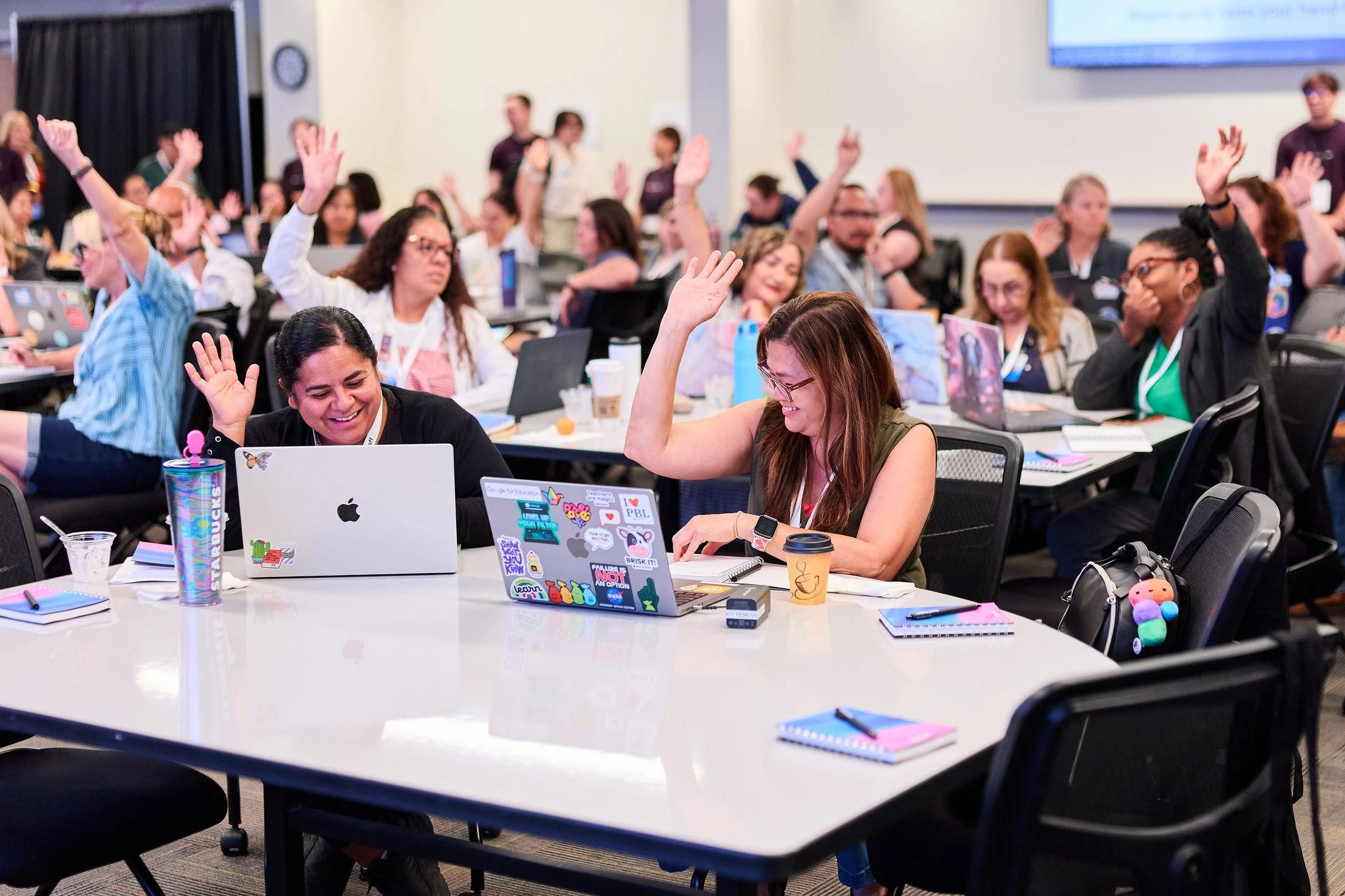
教育工作者参加AI技能工作坊。
今年夏天,超过1600名教师、学校管理者及学区领导正参与由OpenAI Academy主办、沃尔顿家族基金会合作支持的实践性AI技能工作坊。教师们与同行及OpenAI导师并肩协作,共同应对他们熟知的挑战——从为不同学习者调整课程、与家庭沟通,到遵循学区指导方针并减少行政工作。
这些工作坊已初步展示了教师主导的AI应用在实践中的面貌。在费尔法克斯,一位小学音乐教师将她的课程大纲、评分政策、学区规定和教学方法输入ChatGPT,创建了一份可供整个学年使用的规划资源。琼斯伯勒的一位四年级教师利用ChatGPT将冗长的教案转化为以当日课程标准为核心的30至40分钟精炼课程。芝加哥的教育工作者描述了利用ChatGPT模拟科学实验、支持学生动画项目,以及分析超过200部小说以发现代表性缺失的情况。在圣贝纳迪诺,一位校长借助ChatGPT处理了一项复杂的排课任务,她表示这项工作原本可能需要花费数小时甚至数天。
在首批技能工作坊中,93%的参与者表示他们带走了可以再次使用的内容,96%的人计划在30天内应用所学。同样重要的是,教育工作者告诉我们,他们的一些最佳想法来自于观察同事如何以不同方式使用相同的工具。
当教师主导时,AI在教育中的效果最佳。我们的目标是赋予他们工具、信任、培训及发言权,以实现这一目标。
新的学区合作伙伴包括:阿比林独立学区(得克萨斯州)、阿德莱·E·史蒂文森高中125学区(伊利诺伊州)、巴尔的摩市公立学校(马里兰州)、博伊西学区(爱达荷州)、克拉克stown中央学区(纽约州)、埃尔多拉多县教育局(加利福尼亚州)、Epic特许学校(俄克拉荷马州)、弗拉格勒学校(佛罗里达州)、沃斯堡独立学区(得克萨斯州)、弗里斯科独立学区(得克萨斯州)、亨布尔独立学区(得克萨斯州)、克恩高中学区(加利福尼亚州)、基林独立学区(得克萨斯州)、拉勒米县第一学区(怀俄明州)、刘易斯维尔独立学区(得克萨斯州)、洛杉矶县教育局(加利福尼亚州)、尼德姆公立学校(马萨诸塞州)、新特里尔镇高中203学区(伊利诺伊州)、北区独立学区(得克萨斯州)、奥克兰学校(密歇根州)、奥兰治县教育局(加利福尼亚州)、奥兰治县公立学校(佛罗里达州)、波坎蒂科山中央学区(纽约州)、拉伊乡村走读学校(纽约州)、圣克鲁斯县教育局(加利福尼亚州)、萨拉索塔县学校(佛罗里达州)、圣弗莱恩谷学校(科罗拉多州)、镇高中211学区(伊利诺伊州)、文图拉联合学区(加利福尼亚州)、弗吉尼亚海滩市公立学校(弗吉尼亚州)、威斯敏斯特公立学校(科罗拉多州)
When we introduced ChatGPT for Teachers in 2025 to nearly 150,000 teachers and staff, our goal was to give educators a secure place to explore AI, understand where it is useful, and help shape how it should be used in education. Today, we are expanding this work to 55 additional school systems across 20 states, bringing ChatGPT for Teachers to over 100,000 more educators and staff.
The new cohort of district partnerships includes 1 in 5 of America’s 20 largest public school districts and some of the country’s most diverse school systems. With this new cohort, OpenAI is now working with more than 100 K–12 organizations across 30 states to provide free access and training to over 300,000 educators and staff.
Alongside this, we’re also announcing a data privacy agreement spanning 16 states, a first for the industry, that provides a common framework for districts to evaluate ChatGPT for Teachers against their student data privacy requirements, helping make responsible AI adoption simpler and more consistent across school systems.
Our work continues to be guided by the belief that AI should support learning, not shortcut it, and educators should remain in control of how AI shapes classroom experiences. In this spirit, ChatGPT for Teachers continues to be available to administrators, faculty, and educators only. ChatGPT for Teachers remains a free tool for verified U.S. K–12 educators through June 2028.
Responsible adoption at national scale: ChatGPT for Teachers district partners across the country
Building trust into district adoption
For school systems, responsible AI adoption also requires clear privacy protections and a way for district leaders to understand and manage how tools are used.
OpenAI is also expanding the privacy infrastructure that helps districts adopt AI responsibly. We’re introducing a 16-state National Data Privacy Agreement through the Student Data Privacy Consortium(opens in a new window) framework, giving districts in participating states a recognized path to evaluate and adopt ChatGPT for Teachers without negotiating separate agreements district by district. This is designed to meet districts and states within the privacy process they already use, adapting to state and local requirements, and making responsible adoption easier.
Today, our signed General Offers cover 16 states: Illinois, Iowa, Maine, Massachusetts, Missouri, Nebraska, New Hampshire, New Jersey, New York, Ohio, Rhode Island, Tennessee, Texas, Vermont, Virginia, and Washington. California is also covered by a separate agreement.
For school systems, responsible AI adoption depends not only on access, but on governance, privacy, procurement, and trust. This work builds on statewide agreements OpenAI has already signed and reflects a broader commitment to meeting districts where they are, with the legal and privacy protections their communities require.
ChatGPT for Teachers was designed with education-grade privacy, security, and administrative controls. Data shared in a ChatGPT for Teachers workspace is not used to train our models by default, and school and district leaders can bring educators into a managed workspace(opens in a new window) with role-based controls designed to support schools’ FERPA requirements.
As AI evolves from answering questions to helping carry out increasingly complex, multi-step workflows, access to tools like ChatGPT alone won’t be enough. Through our shared implementation model, OpenAI is working alongside districts to provide hands-on training, support for district leaders, peer learning across school systems, and ongoing guidance to help educators build the skills and confidence to take advantage of these capabilities. Through this close collaboration, feedback from districts helps OpenAI understand what educators and administrators need next.
This structure is a glimpse at what responsible AI adoption can look like at scale when teachers experiment in a secure workspace, districts implement AI with appropriate oversight and expert guidance, and educators and leaders share what works across classrooms, schools, and communities.
“Education has always helped young people prepare for the world they’re going to inherit. In the age of AI, students need educators and schools that help them build judgment, confidence, and agency with these tools,” said Leah Belsky, Vice President of Education, OpenAI. “By partnering with educators, our goal is to give teachers time, training, and a community to learn from one another, and they help us build alongside the people who know students best.”
Lynwood Unified was one of the first districts to join OpenAI’s first K–12 cohort. Their vision is clear: treat AI as an equity issue, prioritize privacy, and give educators the support to explore it responsibly. Through initial training and ongoing space to experiment and learn with peers, faculty are growing more confident and using AI to enhance their teaching. That experience also helps educators develop an informed point of view so they can guide students when questions about AI arise.
1 of 5
Giving teachers the agentic tools and support to lead
Across our work with educators, we’re seeing that the most immediate value often starts with time: helping teachers adapt lessons, draft family communications, prepare substitute materials, and move through recurring administrative work faster, so they can spend more attention on students. In a privacy-preserving OpenAI analysis(opens in a new window) from January 1 to July 16, educators sent more than 1.9 million messages related to time-saving tasks, including 900,000 about report cards and progress reports, 800,000 about lesson planning, and more than 100,000 each about substitute plans and teacher-evaluation materials.
Tools like the K-12 Educator plugin support work like lesson planning, adapting materials, analyzing information, and creating classroom resources, while giving school and district leaders administrative controls and education-grade privacy and security protections.
We’re also continuing training through OpenAI Academy, our work with districts, and the National Academy for AI Instruction with the American Federation of Teachers, a five-year initiative designed to equip 400,000 K–12 educators with practical AI skills.
Educators participate in an AI Skills Jam.
This summer, more than 1,600 teachers, administrators, and district leaders are participating in hands-on AI Skills Jams hosted by OpenAI Academy and in partnership with the Walton Family Foundation. Teachers are working alongside peers and OpenAI mentors on challenges they already know well—from adapting a lesson for different learners and communicating with families to navigating district guidance and reducing administrative work.
Those sessions are already showing what teacher-led adoption can look like in practice. In Fairfax, an elementary music teacher brought her curriculum, grading policies, district regulations, and teaching approach into ChatGPT to create a planning resource she could use throughout the school year. A fourth-grade teacher in Jonesboro used ChatGPT to turn lengthy lesson plans into focused 30- to 40-minute lessons centered on the day’s required standards. Chicago educators described using ChatGPT to simulate science experiments, support student animation projects, and analyze more than 200 novels for gaps in representation. In San Bernardino, a principal used it to tackle a complex scheduling task she said could otherwise have taken hours or days.
Across the first Skills Jams, 93% of participants said they left with something they could use again, and 96% said they planned to apply what they learned within 30 days. Just as importantly, educators told us that some of their best ideas came from seeing how colleagues approached the same tools differently.
AI in education works best when teachers lead. Our goal is to give them the tools, trust, training, and voice to do exactly that.
New district partnerships include: Abilene Independent School District (TX), Adlai E. Stevenson High School District 125 (IL), Baltimore City Public Schools (MD), Boise School District (ID), Clarkstown Central School District (NY), El Dorado County Office of Education (CA), Epic Charter Schools (OK), Flagler Schools (FL), Fort Worth Independent School District (TX), Frisco Independent School District (TX), Humble Independent School District (TX), Kern High School District (CA), Killeen Independent School District (TX), Laramie County School District 1 (WY), Lewisville Independent School District (TX), Los Angeles County Office of Education (CA), Needham Public Schools (MA), New Trier Township High School District 203 (IL), Northside Independent School District (TX), Oakland Schools (MI), Orange County Department of Education (CA), Orange County Public Schools (FL), Pocantico Hills Central School District (NY), Rye Country Day School (NY), Santa Cruz County Office of Education (CA), Sarasota County Schools (FL), St. Vrain Valley Schools (CO), Township High School District 211 (IL), Ventura Unified School District (CA), Virginia Beach City Public Schools (VA), Westminster Public Schools (CO)
本文内容采集自官方网站,排版和翻译可能与原页面存在差异。
阅读官方全文