患者的请求、临床信函和问诊记录都会产生医护团队必须审核并处理的工作。当这些工作积压时,患者等待回复的时间就会延长,重要信息也可能滞留在队列中。
Anima(在新窗口中打开)将这些工作流程整合到一个平台中,配备专门的 AI 队友,负责收集患者病史、处理文档并为医护团队起草临床记录。其愿景是为每个人提供个性化医疗,秉持医疗应随需求而行的信念。
Anima 起步于英国,目前为 1,000 多家诊所的超过 1,400 万名患者提供服务,每月处理超过 80 万例病例。它正在拓展到美国、澳大利亚及其他地区。据 Anima 首席执行官兼联合创始人 Shun Pang 介绍,该公司在其文档工作流程中使用 GPT‑6 模型,在通话中使用 GPT‑Live,并在对全部闭源和开源模型进行基准测试后选择了 OpenAI。
“我们选择 OpenAI 来承载 Anima 的关键任务工作负载,是因为其卓越的智能水平、单位成本智能以及通过上下文学习实现的可引导性。”
—Shun Pang,Anima 联合创始人兼首席执行官
Anima 诊所工作流程影像。
帮助患者来电接通,帮助医护团队服务患者
在创办 Anima 之前,Shun 接受过临床培训,期间他看到一位患者因为异常检测结果在队列中滞留了六个月而错过了可能挽救生命的治疗。他逐渐相信,医疗保健的问题不在于医学本身,而在于信息如何在系统中流动。他构建 Anima 是为了让医护团队有更多能力回应患者的需求。该平台将患者请求、临床文档和后续工作整合到一个地方。
Anima 的 AI 接待员 Andi 基于 GPT‑Live 构建。患者可以通过电话向 Andi 描述症状,同时 Anima 专有的策略引擎引导对话按照确定性的、经临床批准的问诊工作流程进行。随后 GPT‑5.4 mini 选择适当的问卷,完成的病史会作为结构化病例出现在诊所仪表板中。医生和诊所工作人员可以从那里审核病例并采取行动。
Anima 报告称,使用 Andi 的诊所已将电话等待时间从 40 到 50 分钟缩短至 10 分钟,降幅至少为 75%。在 Anima 的患者调查中,86% 的人表示他们会再次使用 Andi。Anima 发现,80 多岁和 90 多岁的人是使用体验最满意的用户群体之一。“他们非常乐意与语音代理交谈,”Shun 说。“它无限耐心,而且非常有礼貌。”
几天内清理 100,000 份文档
Anima 的 Documents 产品使用 GPT‑6 模型从传入的临床文档中提取信息,例如发送者、接收者、文档类型和事件日期。随后多阶段流水线将每份文档匹配到正确的患者,识别适当的临床代码,并建议诊所工作人员审核的下一步操作。
临床编码被证明是最难解决的技术问题之一。“大约有 800,000 个可能的 SNOMED 代码,”Anima 工程负责人 Michael Skupien 说。“只有一小部分被经常使用,但不同诊所对于使用哪些代码仍然做出不同的决定。”
Anima 没有要求诊所配置系统或为每个客户微调单独的模型,而是使用上下文学习来使模型决策适应每个诊所。这种方法需要能够一致遵循指令的模型。
“OpenAI 的所有模型都非常擅长遵循指令、易于引导,并且在引导方面很可靠。”
—Michael Skupien,Anima 工程负责人
据 Anima 称,过去每小时处理约 15 份文档的诊所现在通常处理 30 到 45 份。表现最好的诊所处理 45 到 60 份。“我们看到诊所在采用 Anima 后的几天内就清理了超过 100,000 份文档的积压,”Shun 说。“这意味着重要的更新和药物变更能及时送达临床医生,而不是在队列中滞留数月。”
几秒钟内起草临床记录
当患者分享关键信息时,医生需要在倾听和为病历做记录之间分散注意力。Anima 使用 GPT 5.6 Luna 构建了其 Scribe 产品,将问诊转录稿转化为结构化临床记录,然后重用相同的临床上下文来起草转诊信和患者随访消息。
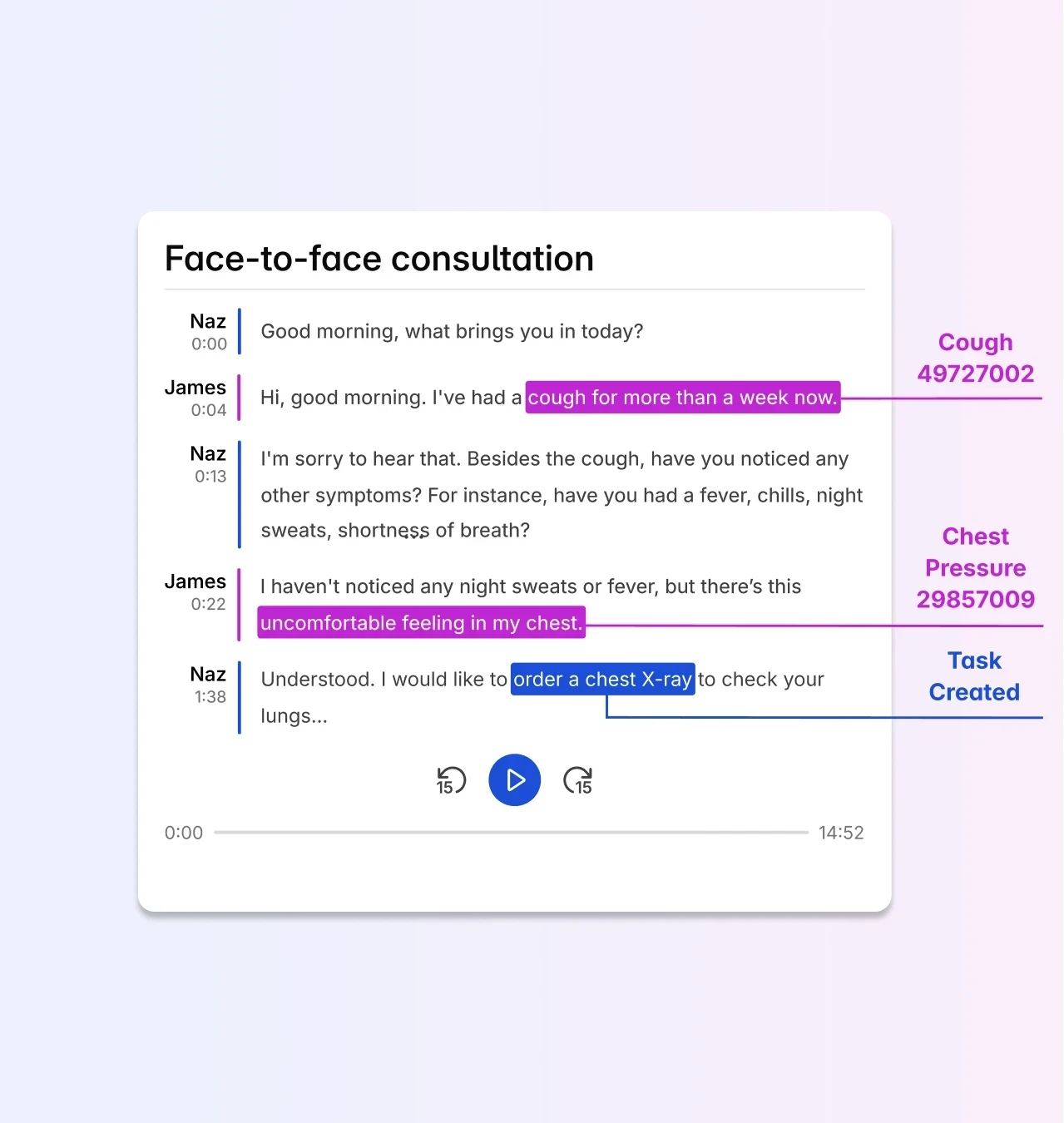
医生不必在整个预约过程中打字,可以将更多注意力放在患者身上。Anima 报告称,过去需要几分钟才能写完的问诊记录现在几秒钟内即可起草完成,供临床医生审核。通常需要 5 到 15 分钟才能生成的转诊信也可以根据问诊和患者记录在几秒钟内起草完成,供临床医生审核。
“患者在问诊后不久就会收到清晰的随访消息,减少了焦虑并改善了记忆,”Shun 说。“我们经常听说医生现在能按时结束一天的工作,而不是工作到晚上 8 点或 9 点。”
为随需求而行的医疗建设能力
Anima 的愿景是为每个人提供个性化医疗。这需要医护团队拥有信息、时间和能力来了解每个人的需求,并在整个患者旅程中采取行动。
其与 OpenAI 模型的合作支持朝着这一愿景迈出切实的步伐。Andi 通过电话收集信息,并将其转化为结构化请求供工作人员处理。Documents 帮助团队处理传入的临床信息。Scribe 起草记录和随访沟通内容供临床医生审核。
Anima 报告称,其平台上大多数病例在 24 小时内得到解决,中位解决时间约为 3.5 小时。“在 OpenAI 模型的支持下,我们正在对英国的 1,400 万名患者产生巨大影响,”Shun 说。“这对患者和诊所来说确实是关键任务。”
Anima 为团队今天提供了更多关怀的空间,并帮助他们为未来构建路径和服务。
Patient requests, clinical letters, and consultation notes all create work that care teams must review and act on. When that work builds up, patients can wait longer for a response, and important information can sit in queues.
Anima(opens in a new window) brings these workflows into one platform, with specialized AI teammates that gather patient histories, process documents, and draft clinical notes for care teams. Its vision is personalized healthcare for everyone, guided by the conviction that care should follow need.
Anima began in the UK, where it now serves over 14 million patients across more than 1,000 clinics and processes more than 800,000 cases a month. It’s expanding into the US, Australia, and beyond. The company uses GPT‑6 models in its document workflows and GPT‑Live for calls, selecting OpenAI after benchmarking all closed-source and open-source models, according to Shun Pang, Anima’s CEO and co-founder.
“We chose OpenAI for Anima’s mission-critical workloads because of superior intelligence, intelligence per dollar, and steerability with in-context learning.”
—Shun Pang, Co-founder and CEO, Anima
Anima clinic workflow footage.
Helping patients’ calls get through, and helping care teams serve them
Before he started Anima, Shun had gone through clinical training, where he saw a patient miss potentially life-saving care because abnormal test results sat in a queue for six months. He came to believe that the problem with healthcare wasn’t about medicine, but about how information moved through the system. He built Anima to give care teams more capacity to respond to patients’ needs. The platform brings patient requests, clinical documents, and follow-up work into one place.
Anima’s AI receptionist, Andi, is built on GPT‑Live. Patients can describe their symptoms over the phone to Andi, while Anima’s proprietary policy engine guides the conversation through deterministic, clinically approved intake workflows. GPT‑5.4 mini then selects the appropriate questionnaire, and the completed medical history appears as a structured case in the clinic dashboard. Doctors and clinic staff can review the case and take action from there.
Anima reports that clinics using Andi have reduced phone waits from 40 to 50 minutes to 10 minutes, a reduction of at least 75%. In Anima’s patient surveys, 86% said they would use Andi again. Anima found that people in their 80s and 90s were among its happiest users. “They’re very happy to talk to a voice agent,” says Shun. “It’s infinitely patient and very polite.”
Clearing 100,000 documents within days
Anima’s Documents product uses GPT‑6 models to extract information from incoming clinical documents such as the sender, recipient, document type, and event dates. A multi-stage pipeline then matches each document to the correct patient, identifies the appropriate clinical codes, and suggests the next action for clinic staff to review.
Clinical coding proved to be one of the hardest technical problems to solve. “There are around 800,000 possible SNOMED codes,” says Michael Skupien, Engineering Lead at Anima. “Only a fraction are used regularly, but different practices still make different decisions about which codes to use.”
Rather than ask clinics to configure the system or fine-tune separate models for each customer, Anima uses in-context learning to adapt model decisions to each practice. This approach requires models that can follow instructions consistently.
“All of OpenAI’s models are really good at following instructions, easy to steer, and reliable in that steering.”
—Michael Skupien, Engineering Lead, Anima
According to Anima, practices that used to process about 15 documents per hour typically process 30 to 45. Top-performing clinics process 45 to 60. “We’ve seen clinics clear document backlogs of more than 100,000 documents within days of adopting Anima,” says Shun. “That means important updates and medication changes reach clinicians promptly instead of sitting in a queue for months.”
Drafting clinical notes in seconds
As patients share critical information, doctors need to split their attention between listening and taking notes for the medical record. Anima built its Scribe product with GPT 5.6 Luna to turn consultation transcripts into structured clinical notes, and then reuse that same clinical context to draft referral letters and patient follow-up messages.
Instead of typing throughout the appointment, a doctor can give more of their attention to the patient. Anima reports that consultation notes that once took several minutes to write are drafted in seconds for the clinician’s review. Referral letters that often required 5 to 15 minutes to produce can also be drafted within seconds from the consultation and patient record, ready for the clinician to review.
“Patients receive clear follow-up messages shortly after the consultation, reducing anxiety and improving recall,” says Shun. “We often hear that doctors now finish their day on time instead of working until 8 or 9 p.m.”
Building capacity for care that follows need
Anima’s vision is personalized healthcare for everyone. That requires care teams to have the information, time, and capacity to understand each person’s needs and act on them across the whole patient journey.
Its work with OpenAI models supports practical steps towards that vision. Andi gathers information over the phone and turns it into structured requests for staff to act on. Documents helps teams process incoming clinical information. Scribe drafts notes and follow-up communications for clinicians to review.
Anima reports that most cases across its platform are resolved within 24 hours, with a median resolution time of approximately 3.5 hours. “We’re having a huge impact on 14 million patients in the UK supported by OpenAI’s models,” Shun says. “It’s really mission-critical for the patients and the clinics.”
Anima gives teams more room to care today, and helps them build pathways and services for the future.
本文内容采集自官方网站,排版和翻译可能与原页面存在差异。
阅读官方全文