Chatham Financial(在新窗口中打开)就复杂的资本市场决策向客户提供咨询,在这些决策中,准确性和可审计性至关重要。随着AI能力的进步,该公司看到了一个机会,可以将经过验证的流程转变为受治理、可重复的工作流和软件,减少花在常规执行上的时间,使其专家能够更专注于客户需求。
如今,Chatham使用Codex构建内部和面向客户的工具,并使用GPT‑5.6为AI功能提供支持。这项工作涵盖员工构建的应用程序、其下一代资本市场操作系统Chatham Onyx,以及其流程再造咨询服务Process Zero,后者将交易验证从30分钟加速到4分钟以内。
“我们并不是简单地将AI视为运行每个流程的更快方式。借助OpenAI,我们可以从想要的结果出发,确定判断在哪些环节重要,并设计出利用现有能力实现它的最佳方式。”
—Matt Henry,Chatham Financial首席执行官
使用Codex再造交易验证
通过Process Zero,Chatham围绕结果再造工作流。对于每个工作流,该公司确定所需的最小输入和证据,确定人工判断在哪些环节必不可少,并决定AI和AI构建的工具应如何支持这项工作。
交易验证是一个早期示例。Chatham的控制与数据完整性团队通过验证每条系统记录是否反映客户授权的内容以及实际执行的内容,来保护交易数据的准确性。
使用Codex,Chatham开发了一个交易验证应用程序,用于收集支持性交易证据、比较关键条款,并标记差异以供审查。Chatham正在将该应用程序的结果与经验丰富的审查人员的结果进行比较。
“在早期测量中,该应用程序将审查时间从大约30分钟减少到4分钟以内。同样重要的是,在扩大自动化之前,我们正在根据真实交易和经验丰富的审查人员来验证其表现。最终,我们将能够更快地产生易于审计且更准确的结果。”
—Alex Nordlinger,Chatham AI Advisory实践联合负责人
Chatham计划将该应用程序扩展到更多交易类型,并自动化更多工作流,同时保持适当的控制和专业监督。
使用OpenAI扩展员工构建的应用程序
Chatham面向客户的AI工作源于其自身的运营经验。Chatham的员工在研究、分析、起草、软件开发和其他日常活动中使用ChatGPT和Codex。AI已成为全公司广泛采用的实用工具。
员工还通过Chatham Vibes成为构建者,这是一个用于创建适合其工作的应用程序的内部平台。员工使用一系列模型进行构建,Vibes应用程序内的AI功能默认运行在GPT‑5.6 Terra上,并可根据每个应用的配置选择升级到GPT‑5.6 Sol。
这些应用程序越来越多地支持面向客户的工作流。其中一个帮助团队审查到期上限交易,并准备定价工作簿和客户沟通材料。其他应用程序支持诸如生成固定收益利率表、准备对冲仪表板和审查交易确认书等工作流。Chatham专业人员带来市场背景、客户理解和判断,以评估工作、在需要时进行完善,并决定哪些内容可以送达客户。
使用Codex和OpenAI模型构建Chatham Onyx
Chatham Onyx将资产、债务和衍生品带入一个环境,使客户和顾问可以基于互联、受治理的数据开展工作,并使用AI而不失去对底层来源的可追溯性。
Chatham在Onyx开发生命周期中全程使用Codex。团队使用它来帮助规划、构建、测试、记录和审查软件,缩短从概念到持久产品能力的路径。
“Codex正在帮助我们的团队更快地将产品愿景转化为可用的能力,同时我们对准确性、安全性和问责制的标准保持不变。”
—John DeGuenther,Chatham Financial首席技术官
Onyx平台利用GPT‑5.6 Sol、GPT‑5.6 Terra、GPT‑5.4和GPT‑4.1。简单分析和非生产测试等任务被路由到最具成本效益的模型,而GPT‑5.6用于需要最大化准确性和价值的复杂任务。
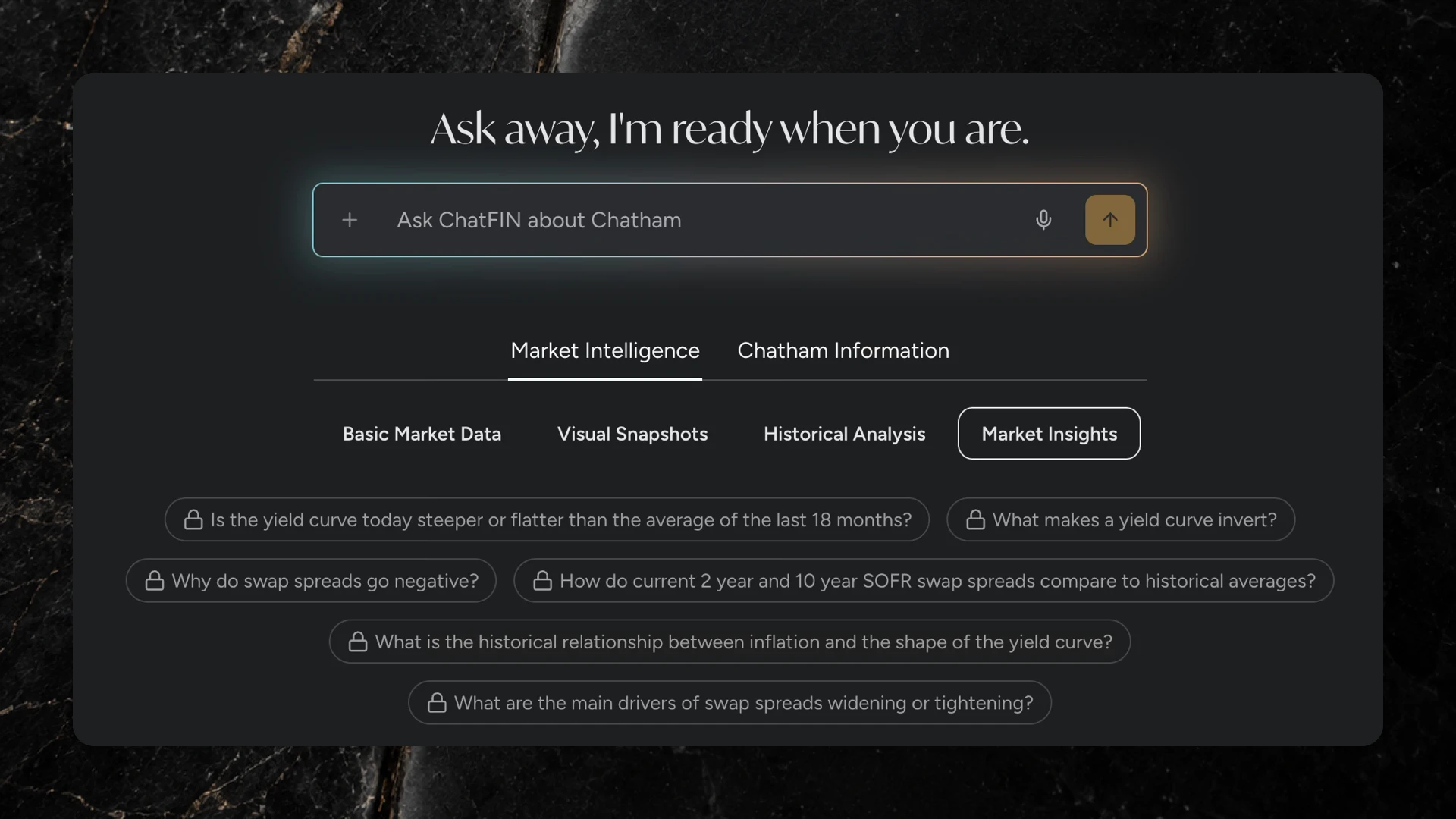
一个例子是ChatFIN,它总结历史市场数据中的模式,帮助用户了解其投资组合,并定位和链接到债务、衍生品和租赁条款的法律文件。
这些能力帮助客户和顾问获取信息和洞察,而Chatham的顾问则带来解释这些信息并将其应用于每位客户所需的主题专业知识。
为专家工作创造更多能力
Chatham正在使用OpenAI执行结构化比较、组织证据、识别异常,并帮助团队更高效地探索信息。因此,顾问可以减少花在汇集信息上的时间,将更多时间用于解释信息、处理困难案例和为客户提供建议。
接下来,Chatham计划将交易验证扩展到更多产品,继续完善员工构建的应用程序,并使用Codex帮助为Onyx开发新能力。
“我们的限制从来不是专业知识。而是我们的专家花在达到能够应用专业知识这一点上的时间。OpenAI正在帮助我们夺回这些时间,我们走得越远,我们的专家就能把越多时间用于在能为客户创造最大价值的地方运用他们的判断。”
—Mike Noonan,Chatham Financial联合首席运营官
Chatham Financial(opens in a new window) advises clients on complex capital markets decisions, where accuracy and auditability are paramount. As AI capabilities advanced, the firm saw an opportunity to turn proven processes into governed, repeatable workflows and software, reducing the time spent on routine execution, so its experts can focus more on client needs.
Today, Chatham uses Codex to build internal and client-facing tools and GPT‑5.6 to power AI features. This work spans employee-built applications, its next-generation capital markets operating system Chatham Onyx, and its reengineering consulting service Process Zero, which accelerated trade validation from 30 minutes to under 4.
“We are not approaching AI simply as a faster way to run every process. With OpenAI, we can start with the outcome we want, identify where judgment matters, and design the best way to deliver it using the capabilities now available.”
—Matt Henry, Chief Executive Officer, Chatham Financial
Reengineering trade validation with Codex
Through Process Zero, Chatham reengineers workflows around outcomes. For each workflow, the firm identifies the minimum inputs and evidence required, determines where human judgment is essential, and decides how AI and AI-built tools should support the work.
Trade validation is an early example. Chatham’s Controls and Data Integrity team protects the accuracy of transaction data by validating that each system record reflects what the client authorized and what was executed.
Using Codex, Chatham developed a trade validation application that gathers supporting transaction evidence, compares key terms, and flags discrepancies for review. Chatham is comparing the app’s results with those of experienced reviewers.
“In early measurement, the application reduced review from approximately 30 minutes to under 4 minutes. Just as important, we are validating its performance against real transactions and experienced reviewers before we expand automation. Ultimately, we will be able to produce easily auditable and more accurate results faster.”
—Alex Nordlinger, Co-head of Chatham’s AI Advisory practice
Chatham plans to extend the application to additional trade types and automate more of the workflow while maintaining appropriate controls and professional oversight.
Scaling employee-built applications with OpenAI
Chatham’s client-facing AI work grew from its own operating experience. Chatham’s employees use ChatGPT and Codex in research, analysis, drafting, software development, and other daily activities. AI has become a practical tool widely adopted across the firm.
Employees have also become builders through Chatham Vibes, an internal platform for creating applications tailored to their work. Employees build with a range of models, and the AI features inside Vibes applications run on GPT‑5.6 Terra by default, with GPT‑5.6 Sol as an optional upgrade based on per-app configuration.
These applications increasingly support client-facing workflows. One helps teams review maturing-cap trades and prepare pricing workbooks and client communications. Others support workflows such as producing fixed-income rate sheets, preparing hedging dashboards, and reviewing trade confirmations. Chatham professionals bring the market context, client understanding, and judgment to evaluate the work, refine it where needed, and determine what reaches the client.
Building Chatham Onyx with Codex and OpenAI models
Chatham Onyx brings assets, debt, and derivatives into an environment where clients and advisors can work from connected, governed data and use AI without losing traceability to the underlying source.
Chatham uses Codex across the Onyx development lifecycle. Teams use it to help plan, build, test, document, and review software, shortening the path from a concept to a durable product capability.
“Codex is helping our teams turn product vision into working capabilities more quickly, while our standards for accuracy, security, and accountability remain the same.”
—John DeGuenther, Chief Technology Officer, Chatham Financial
The Onyx platform leverages GPT‑5.6 Sol, GPT‑5.6 Terra, GPT‑5.4, and GPT‑4.1. Tasks like simple analysis and non-production testing are routed to the most cost-effective models, while GPT‑5.6 is used for complex tasks that need to maximize accuracy and value.
One example is ChatFIN, which summarizes patterns in historical market data, helps users understand their portfolios, and locates and links to legal documents for debt, derivative, and lease terms.
These capabilities help clients and advisors access information and insights, while Chatham’s advisors bring the subject matter expertise needed to interpret that information and apply it to each client.
Creating more capacity for expert work
Chatham is using OpenAI to perform structured comparisons, organize evidence, identify exceptions, and help teams explore information more efficiently. As a result, advisors can spend less time assembling information and more time interpreting it, managing difficult cases, and advising clients.
Next, Chatham plans to expand trade validation across additional products, continue refining employee-built applications, and use Codex to help develop new capabilities for Onyx.
“Our constraint has never been expertise. It is the hours our experts spend getting to the point where they can apply it. OpenAI is helping us take those hours back, and the further we go, the more time our experts can spend applying their judgment where it creates the most value for clients.”
—Mike Noonan, Co-Chief Operating Officer, Chatham Financial
本文内容采集自官方网站,排版和翻译可能与原页面存在差异。
阅读官方全文