我们正在推出ChatGPT青少年版,这是一种旨在帮助青少年学习、批判性思考、加深理解并自信使用AI的体验。它为青少年提供了更强的内置安全保护,包括促进健康使用的功能以及为家长提供的额外控制。如果我们的系统估计用户未满18岁,或者用户声明年龄在13至17岁之间, 他们将被自动纳入ChatGPT青少年版。
此次发布建立在我们支持平台上青少年的基础工作之上,包括:推出家长控制、更新我们的18岁以下模型规范、创建我们的青少年安全蓝图、推出年龄预测以及扩展支持青少年学习和健康使用AI的功能。在这些工作中,我们始终遵循四项承诺:将青少年安全放在首位、鼓励现实世界中的支持、像对待青少年一样对待青少年,以及对我们系统的行为方式保持透明。我们在ChatGPT青少年版中进一步强化和推进这些承诺,重点关注学习以及更强大的内置保护。
旨在支持学习
我们相信AI应扩展教育机会,因此我们将ChatGPT青少年版设计为在课堂之外、帮助不一定随时可得的情况下支持青少年,同时让青少年保持积极参与协作学习过程。例如,一个备考的青少年可以请ChatGPT解释一个不熟悉的概念、练习一道题目并检查自己的理解。如果他们要求快速答案,ChatGPT青少年版可以引导他们通过步骤和问题自行解决。该体验汇集了:
- 学习模式,利用引导性问题和支持步骤帮助青少年理解材料。
- 新的负责任作业提醒,可以识别青少年何时似乎在试图走捷径完成作业,并将其重定向到学习模式,进行分步协作解决问题。
- 测验和学习可视化,为青少年提供更多练习、测试所学知识以及更清晰理解困难概念以检验理解的方式。
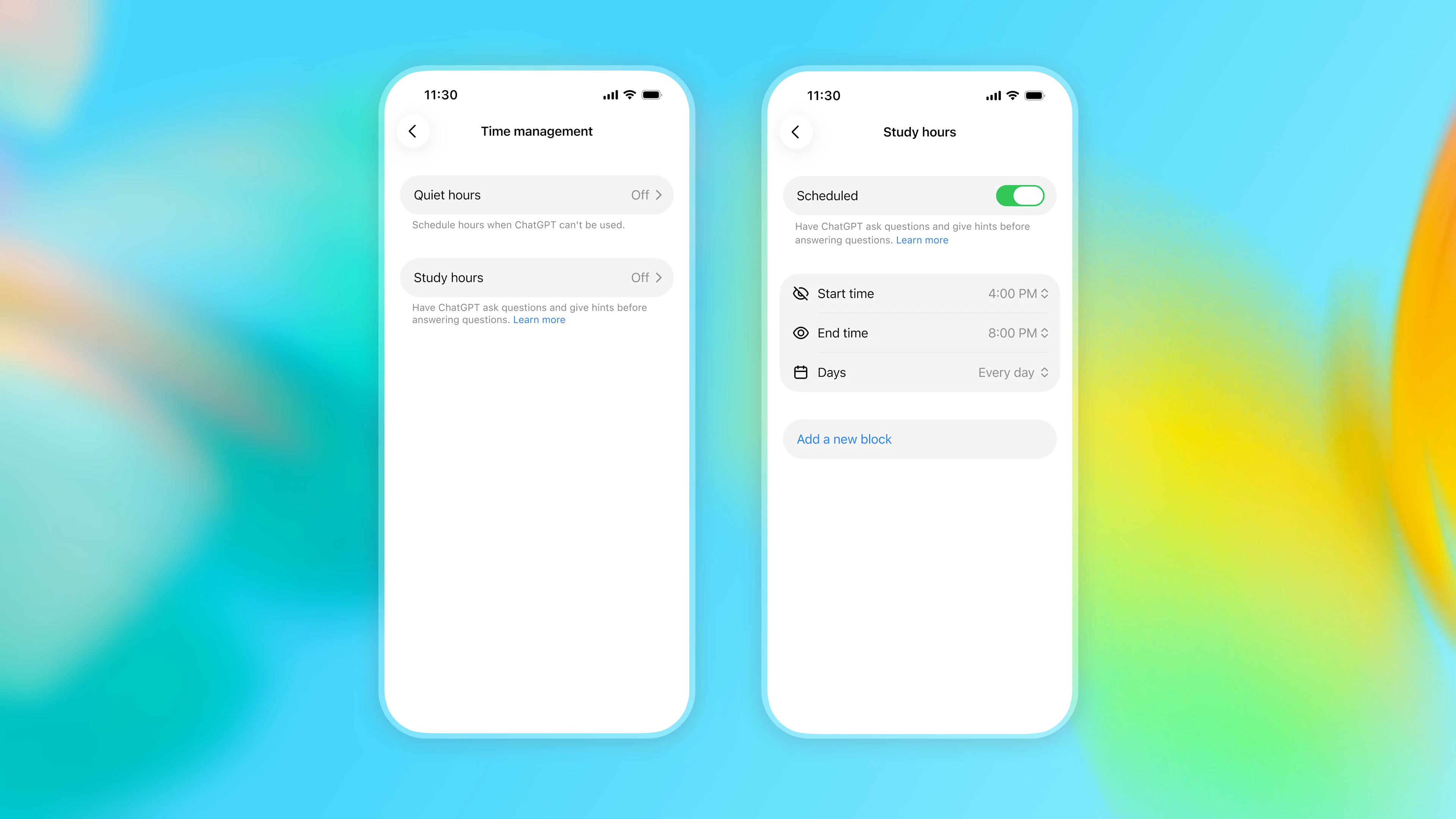
- 借助新的学习时间功能,青少年或家长可以选择默认开启学习模式的时间段,从而更容易将更好的学习习惯变成日常规律。
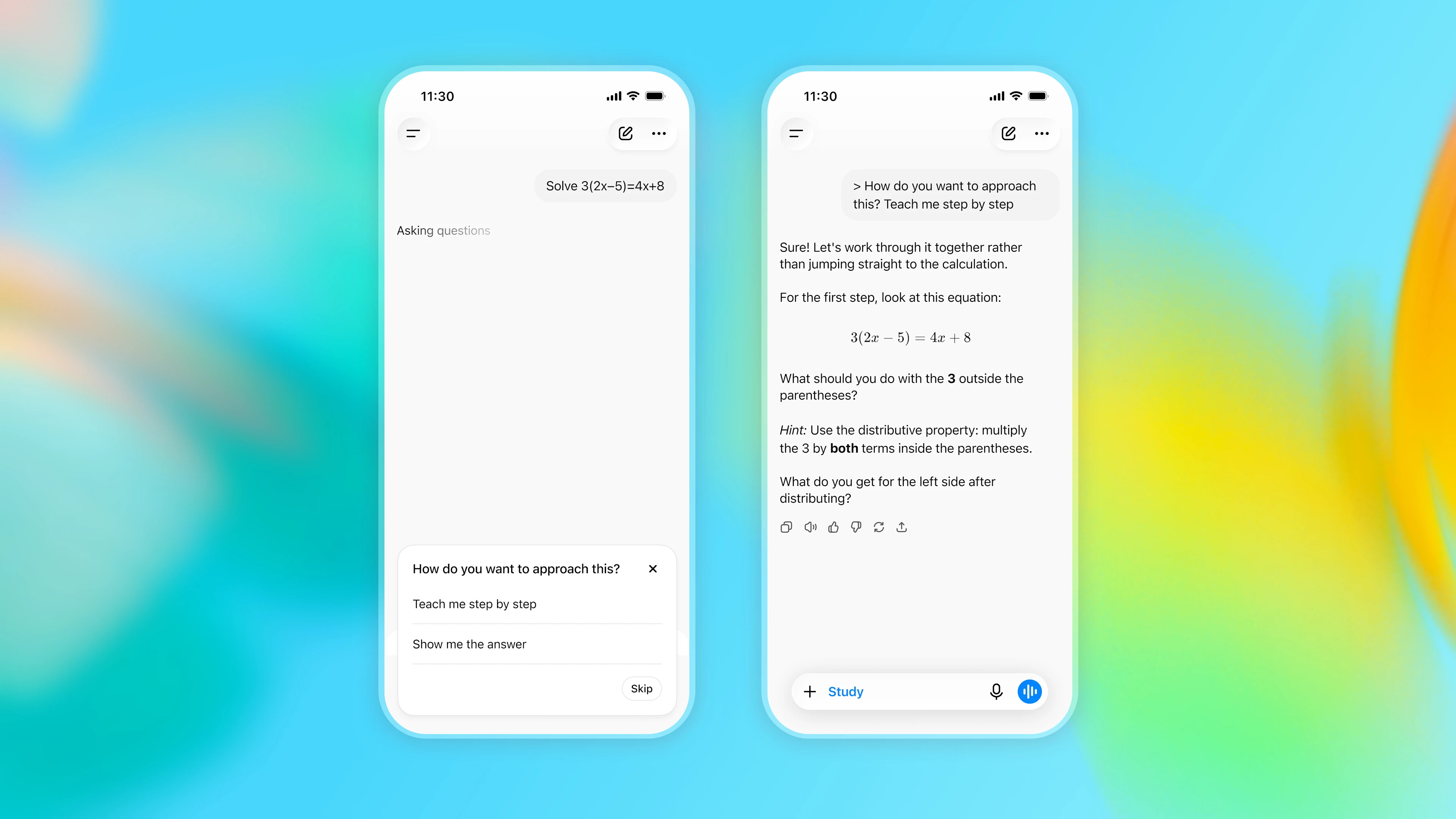
当我们推出学习模式时,它是与教师、科学家和教学法专家共同构建的,并借鉴了学习科学领域的长期研究。它使用引导性问题、支架式教学、元认知提示和知识检查来帮助学生逐步解决问题,而不是简单获得答案。这种设计与关于有效学习技巧(在新窗口中打开)的更广泛研究一致,该研究表明,主动回忆和自我解释比单纯被动复习更能支持更强的理解和长期记忆。我们自己对学习模式等工具的早期评估也显示出学生表现的显著提升。
AI应支持学习,而不是走捷径,教育工作者应继续掌控课堂中的AI体验。本着这种精神,ChatGPT青少年版旨在支持课堂外的学习,而ChatGPT教师版继续为教育工作者和学区提供安全、机构管理的AI访问以及良好使用AI的实用支持。
与CodeAI合作培养青少年
为了帮助培养第一代AI学生,OpenAI和CodeAI宣布了一项标志性合作,为学生和教育工作者提供工具和资源,帮助他们学习如何使用AI并从中受益。该合作将聚焦于围绕技术的教育:帮助青少年理解AI如何运作、如何引导它、质疑它以及用它创造——教师将在塑造AI进入课堂的方式中发挥重要作用。
青少年正在用AI构建什么
青少年已经在使用AI不仅用于学习,还用于构建工具、自学新技能以及解决社区中的问题。这些正是ChatGPT青少年版旨在培养的用途:强大、以学习为中心的AI,帮助年轻人从理解想法走向应用它们。
在弗吉尼亚州,Rushil Kukreja、Arhan Menta和Nayel Rehman开发了WiFind(在新窗口中打开),这是一个搜索救援系统,利用现有Wi-Fi信号帮助定位自然灾害后被困在废墟下的幸存者。该项目源于与当地搜索救援组织的志愿工作,以及一个简单的问题:响应者如何知道首先该在哪里寻找。对团队而言,AI帮助加速了从研究中学习、快速原型设计以及将有前景的概念转化为面向急救人员的工具的过程。得克萨斯州的Crystal Yang使用ChatGPT帮助开发和扩展Audemy(在新窗口中打开),这是一个为盲人学生创建基于音频的教育游戏的平台,已扩展到20万用户和50款游戏。
虽然每位青少年以不同方式使用ChatGPT,但他们都指向了我们希望支持的使用类型:从复杂材料中学习、在指导下构建以及将新技能应用于实际问题。青少年应该能够通过强大、适龄且设计有明确保障措施的工具来探索这种潜力。
更强的保护,默认开启
对于青少年用户,保护措施是默认体验的一部分。对于18岁以下的用户,ChatGPT青少年版应用了适龄保护措施,旨在减少接触可能有害或与发展阶段不相符的内容,同时保留学习、创造和探索的能力。
这些保护措施基于我们模型规范中的18岁以下用户原则,这些原则参考了发展科学和专家指导。在实践中,这意味着在高风险领域(如自残、暴力、饮食失调、危险活动以及露骨色情或暴力内容)应用适龄的模型保护和产品干预措施。
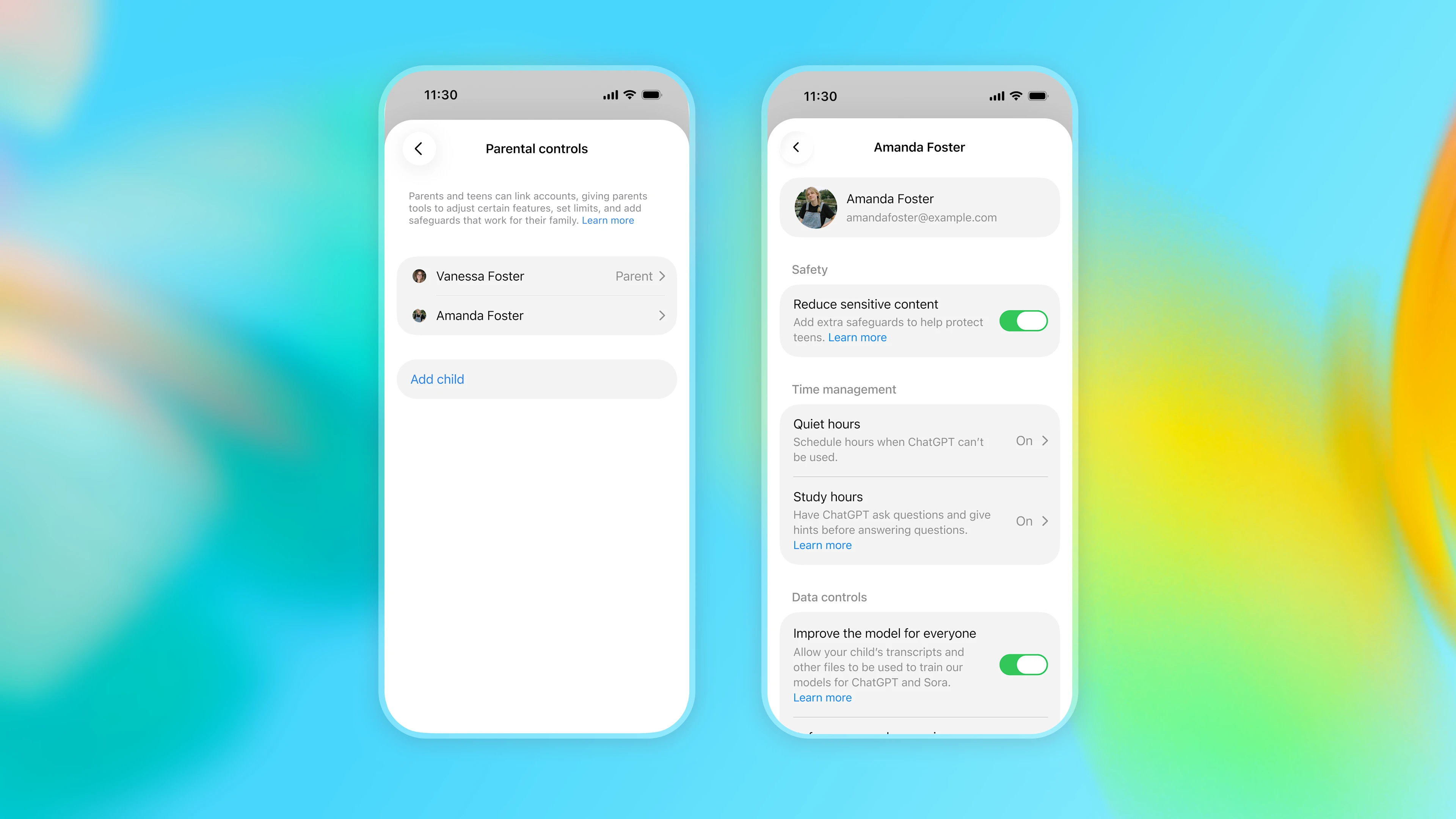
这项工作还建立在我们推出的家长控制和通知家庭工具之上。关联青少年账户的家长可以设置安静时间、管理选定设置,并在有限的高风险情况下接收安全通知。我们正在增加与饮食失调相关的额外通知,同时限制共享内容,并重点关注线下支持可能最为重要的时刻。
支持健康、平衡的使用
我们设计ChatGPT青少年版旨在支持现实世界的人际关系和健康习惯,包括鼓励青少年暂时离开的休息提醒,以及始终将ChatGPT标识为AI的产品提示。
我们正在继续加强对18岁以下用户的适龄行为。我们更新的18岁以下用户模型规范(在新窗口中打开)超越了阻止浪漫或性化角色扮演:ChatGPT不应使用浪漫语言、鼓励情感依赖或暗示其拥有感情或意识。这些更强的保护措施旨在强化健康的现实世界人际关系。
我们还在增加旨在降低情境风险并将青少年引导至有用工具和保护措施的提示和控制,包括:
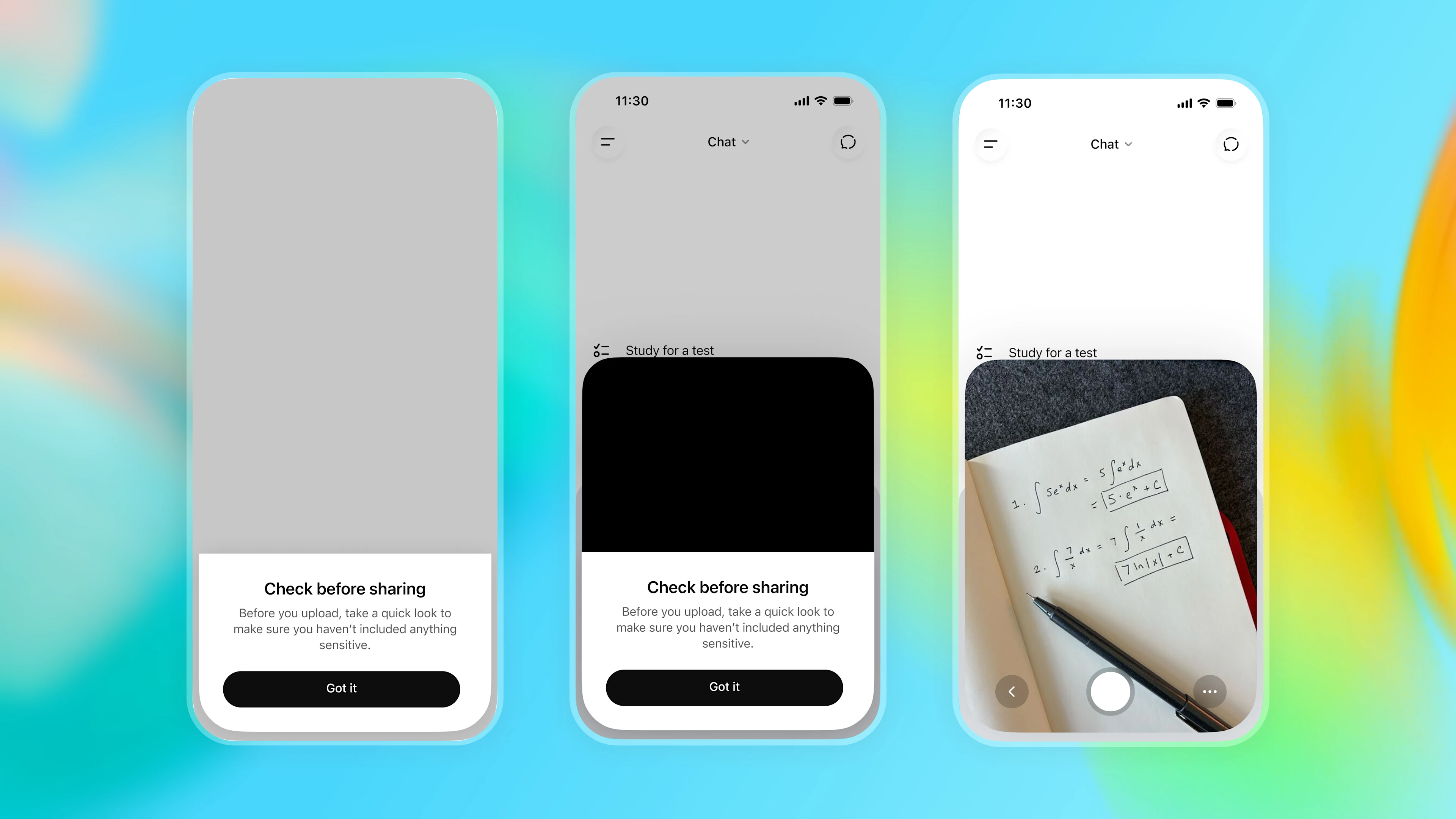
- 敏感图片上传提醒,告诫青少年不要分享私人或敏感图片。
- 青少年专属入门引导,从一开始就介绍可用的学习和安全功能。
- 简单的自定义选项,如强调色和语音变体,帮助体验更具个性化,同时不模糊实用工具与人类关系之间的界限。
持续开展青少年安全使用AI的研究
这些保护措施以持续的安全研究为基础,这些研究参考了发展科学、专家意见,并在青少年可能面临独特或更高风险的领域测试我们模型的安全防护措施。这项工作帮助我们完善针对18岁以下用户的政策,加强产品保护,并改进我们衡量长期进展的方式。
我们开始公开分享更多这项工作,首先是在我们的系统卡片(在新窗口中打开)中新增的18岁以下用户评估,这些评估展示了我们的模型在具有挑战性的敏感内容案例中如何针对青少年特定标准表现。这些评估涵盖自残、饮食失调、暴力、年龄限制商品和服务以及性内容等领域,旨在帮助加深对模型在青少年安全方面表现的理解。
展望未来
我们将继续构建更多功能,以便青少年从AI中受益,并衡量和发布我们所学到的内容。青少年应该能够使用AI来学习、创造和探索。但这种使用应伴随着反映其发展阶段、强化现实世界关系并支持长期健康使用的保护措施。ChatGPT青少年版是我们朝着这一标准迈进的下一个步骤。
We’re introducing ChatGPT for Teens, an experience designed to help teens learn, think critically, deepen understanding, and use AI with confidence. It provides stronger built-in safety protections for teens, including features to promote healthy use and additional controls for parents. If our system estimates someone is under 18 or they state their age is between 13 and 17, they are automatically placed into ChatGPT for Teens.
This launch builds on the foundational work to support teens on our platform including: Introducing Parental Controls, updating our Under-18 Model Spec, creating ourTeen Safety Blueprint, rolling out Age-Prediction and expanding features to support learning and healthy AI use for teens. Across that work, we have been guided by four commitments: put teen safety first, encourage real-world support, treat teens like teens, and be transparent about how our systems should behave. We’re reinforcing and furthering those commitments in ChatGPT for Teens with a focus on learning and even stronger built-in protections.
Built to support learning
We believe AI should expand educational opportunity, which is why we designed ChatGPT for Teens to support moments outside the classroom when help is not always available, while keeping teens engaged in an active and collaborative learning process. A teen studying for a test, for example, can ask ChatGPT to explain an unfamiliar concept, work through a practice problem, and check their understanding. If they ask for a quick answer, ChatGPT for Teens can guide them toward the steps and questions that help them work through it themselves. The experience brings together:
- Study Mode, which uses guiding questions and step-by-step support to help teens understand the material.
- New responsible homework reminders, which can recognize when a teen appears to be trying to shortcut an assignment and redirect them toward Study Mode for step-by-step collaborative problem solving.
- Quizzes and Learning Visualizations which give teens more ways to practice, test what they know, and see difficult concepts more clearly to test understanding.
- And with new Study Hours, teens or parents can choose times when Study Mode is on by default, making it easier to turn better study habits into a routine.
When we introduced Study Mode, it was built with teachers, scientists, and pedagogy experts and drew on longstanding research in learning science. It uses guiding questions, scaffolding, metacognitive prompts, and knowledge checks to help students work through problems step by step instead of simply receiving a solution. That design is consistent with broader research on effective learning techniques(opens in a new window) showing that active retrieval and self-explanation can support stronger comprehension and longer-term retention than passive review alone. Our own early evaluation of tools like Study Mode has also shown promising gains in student performance.
AI should support learning, not shortcut it, and educators should remain in control of AI experiences in classrooms. In this spirit, ChatGPT for Teens is designed to support learning outside of the classroom while ChatGPT for Teachers continues to provide educators and school districts with secure, institution-managed access to AI and practical support for using it well.
Partnering with CodeAI to prepare teens
To help prepare the first AI generation of students, OpenAI and CodeAI are announcing a signature partnership to give students and educators access to tools and resources that will help them learn how to use and benefit from AI. The partnership will focus on the education that surrounds the technology: helping teens understand how AI works, direct it, question it, and create with it—with teachers playing a meaningful role in shaping how AI enters the classroom.
What teens are building with AI
Teens are already using AI not only to study, but to build tools, teach themselves new skills, and work on problems in their communities. Those are the kinds of uses ChatGPT for Teens is meant to foster: capable, learning-centered AI that helps young people move from understanding ideas to applying them.
In Virginia, Rushil Kukreja, Arhan Menta, and Nayel Rehman developed WiFind(opens in a new window), a search-and-rescue system that uses existing Wi-Fi signals to help locate survivors trapped beneath rubble after natural disasters. The project grew out of volunteer work with a local search-and-rescue organization and a simple question about how responders could know where to look first. For the team, AI helped speed up the work of learning from research, prototyping quickly, and turning a promising concept into a tool designed for first responders. Crystal Yang in Texas used ChatGPT to help develop and scale Audemy(opens in a new window), a platform that creates audio-based educational games for blind students, to 200,000 users and 50 games.
While each teen used ChatGPT in different ways, they all point to the kinds of uses we want to support: learning from complex material, building with guidance, and applying new skills to real problems. Teens should be able to explore that potential with tools that are capable, age-appropriate, and designed with clear safeguards.
Stronger protections, on by default
For teen users, protections are part of the default experience. For users under 18, ChatGPT for Teens applies age-appropriate safeguards designed to reduce exposure to content that may be harmful or developmentally inappropriate, while preserving the ability to learn, create, and explore.
These protections are based on our Under-18 Principles in our Model Spec, which are informed by developmental science and guidance from experts. In practice, that means age-appropriate model protections and product interventions in higher-risk areas such as self-harm, violence, eating disorders, dangerous activities, and explicit sexual or graphic content.
This work also builds on the family tools we introduced with parental controls and notifications. Parents with linked teen accounts can set Quiet Hours, manage selected settings, and receive safety notifications in limited high-risk situations. We are adding additional notifications related to eating disorders, while limiting what is shared and focusing on moments when offline support may matter most.
Supporting healthy, balanced use
We designed ChatGPT for Teens to support real-world relationships and healthy habits, with break reminders that encourage teens to step away, and product cues that consistently identify ChatGPT as AI.
We’re continuing to strengthen ChatGPT’s age-appropriate behavior for users under 18. Our updated under-18 model spec(opens in a new window) goes beyond blocking romantic or sexualized roleplay: ChatGPT should not use romantic language, encourage emotional dependence, or imply that it has feelings or consciousness. These stronger protections are designed to reinforce healthy, real-world relationships.
We are also adding cues and controls that are meant to reduce risk in context and point teens toward useful tools and protections, including:
- Sensitive-image upload reminders caution teens against sharing private or sensitive images.
- Teen-specific onboarding introduces the learning and safety features available to them from the start.
- And simple customization options, like accent colors and voice variations, help make the experience feel personal without blurring the line between a useful tool and a human relationship.
Ongoing research for safe AI use by teens
These protections are underpinned by ongoing safety research informed by developmental science, expert input, and testing our models’ safeguards in areas where teens may face distinct or heightened risks. This work helps us refine our policies for under-18 users, strengthen product protections, and improve how we measure progress over time.
We are beginning to share more of this work publicly, starting with new under 18 evaluations we’ve added to our system cards(opens in a new window) that show how our models perform against teen-specific standards in challenging sensitive-content cases. These evaluations cover areas such as self-harm, eating disorders, violence, age-restricted goods and services, and sexual content, and are designed to help advance understanding of model performance on teen safety.
Looking ahead
We will continue to build additional features in order for teens to benefit from AI and measure and publish what we are learning. Teens should be able to use AI to learn, create, and explore. But that access should come with protections that reflect their developmental stage, reinforce real-world relationships, and support healthy use over time. ChatGPT for Teens is our next step in building toward that standard.
本文内容采集自官方网站,排版和翻译可能与原页面存在差异。
阅读官方全文