Wayfair,这个一站式家居购物目的地,帮助购物者从约4000万件商品的目录中为他们的家找到合适的物件。保持产品信息准确并处理来自数万家供应商的复杂请求需要大量人工工作。借助OpenAI模型,Wayfair构建了AI系统,验证了超过1100万项产品规格,并每月自动化处理41000张供应商支持工单,在某些工作流程中自动化率高达70%。这些系统共同创造了更多从Wayfair现有目录中增长销售的机会,同时通过减少目录管理和供应商支持中的人工工作释放了团队产能。
“与OpenAI合作最有价值的地方在于伙伴关系。这不仅仅是获得模型访问权限。而是一起探索新的用例,并能够快速推进。”
——Fiona Tan,Wayfair首席技术官
大规模解决目录质量问题
Wayfair的目录团队管理着近千个不同产品类别的数千万件产品。颜色、材质、尺寸和其他特征的准确标签为搜索、推荐和商品陈列提供支持——帮助购物者更轻松地找到符合需求的物件,并对所购商品充满信心。
“我们的数据质量越好,与客户建立的信任就越多。这至关重要,因为它让购物者能够做出正确的购买决策,直接减少代价高昂的下游问题,比如因产品描述失实而导致的退货,”Wayfair目录商品化副总监Jessica D'Arcy表示。
在与OpenAI合作之前,Wayfair的标签标注依赖于供应商和客户告知Wayfair某些地方看起来有问题。人工努力无法跟上数量。早期用于标签标注的定制AI模型是有效的,但大规模使用时成本高昂。面对需要支持的47000个标签,Wayfair需要一种更有效的方法。
构建可复用的产品属性AI系统
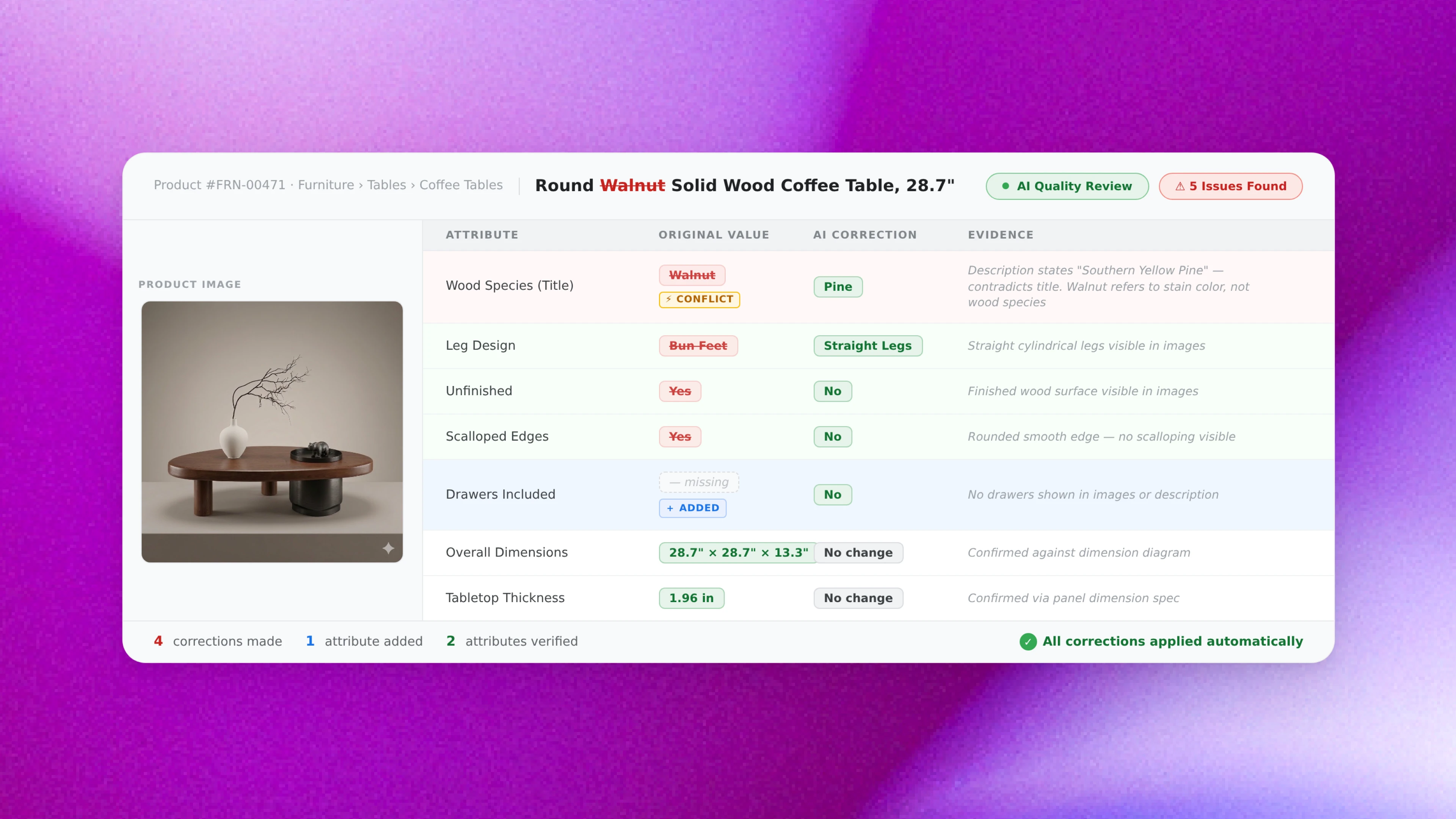
Wayfair利用OpenAI模型构建了一个AI目录质量系统,用于检查和标注产品细节,如颜色、材质和尺寸。首先,该系统利用网络信息和Wayfair的内部定义创建一份指南,解释每个标签的含义。然后,模型使用该指南审查产品信息并分配适当的标签。
借助这一系统,Wayfair目前正在以去年70倍的速度扩展其AI可检查的产品细节范围。这帮助Wayfair以更少的人工工作提高目录准确性——让产品更容易被找到,并降低因listing不准确而导致退货的风险。
“我们的目标是建立信任,让客户对购买的商品完全有信心,”Phillips表示。Wayfair制定了一套结构化审核流程,由员工检查产品样品以核验输出结果,供应商则帮助验证变更。当置信度高时,系统直接更新产品内容并通知供应商。低置信度或高风险的变更需要供应商确认后方可生效。
这个AI驱动的目录质量系统已处理超过100万件产品,一项受控A/B测试显示,处理组的曝光量、点击量和页面排名均有显著提升。对Wayfair而言,更好的产品数据转化为更高的可见性和更多购物者点击——创造了更多从现有目录中产生销售的机会。“当你提高属性完整度时,这不是抽象的。你会在SEO和PLA表现中看到它——在客户如何发现产品中看到它,”Phillips说。
用Wilma加速供应商支持工作流程
Wayfair每月与数万家供应商合作。Wayfair员工此前需要手动审查每一张收到的供应商支持工单,识别供应商的需求,并将问题路由到相应的团队。这是一个耗时且容易出错的过程。“供应商支持涵盖数百种不同的问题类型,”Wayfair全球供应商应用科学负责人Brian Seaman表示。“期望任何一位员工对每一种问题都有深入了解是不现实的。”
为帮助应对这些挑战,Wayfair在其名为Wilma的定制供应商支持平台中加入了AI来帮助分诊工单。借助OpenAI模型,供应商支持平台现在可以读取收到的请求、补充缺失的上下文,并将工单路由到正确的团队。现有的OpenAI API集成帮助团队在不到一个月内从构思走向生产。“Wilma为员工提供了采取行动所需的信息,”Seaman说。“它读取请求,识别供应商的需求,从我们的数据库中引入上下文,在需要时跟进供应商,并将问题路由到正确的团队。”
除了路由工单,Wayfair还部署了数十个AI代理工作流程,帮助团队解决供应商请求。例如,AI审查过往记录、评估复杂案例、建议下一步行动,并为替换零件运营团队起草回复供其审核——帮助员工以更少的人工工作更快地解决供应商问题。
“OpenAI模型将整个旅程中的上下文汇集在一起,这对单个员工来说很难拼凑完整。这种可见性帮助我们提供更好的支持,并有助于提高客户和供应商满意度。”
——Brian Seaman,Wayfair全球供应商应用科学负责人
Wayfair评估AI建议与人工代理最终决策的匹配频率,这一指标称为“对齐率”。持续达到预定阈值的工作流程可以从辅助模式(“副驾驶”)转变为半自主模式(“自动驾驶”)。这种分阶段评估方法帮助团队决定何时一个工作流程已准备好获得更大的自主权。
将ChatGPT带给Wayfair各团队
除了构建自定义 AI 工作流之外,Wayfair 还在其约 12,000 名员工中部署了超过 1,200 个 ChatGPT Enterprise 席位。员工使用 ChatGPT 处理日常任务、解决内部问题,并试验生成式模型。Wayfair 还启用了 ChatGPT Work,将其连接到 Slack 和 Google Drive 等工具,帮助团队简化日常工作流程。
结果一览
在目录方面,Wayfair 验证并纠正了超过 1,100 万件最显眼且最常购买产品的属性数据。接下来,Wayfair 计划部署该能力,以覆盖添加到目录中的每一件新产品,帮助从产品生命周期的起点就最大化产品可见性和销售。
在供应商支持方面,Wayfair 每月自动化处理 41,000 张支持工单,目前在某些工作流中自动化率已达到总工单量的 70%。团队还看到了更快的解决时间、更高的供应商满意度,以及更少的重新打开工单。
Wayfair 还报告了另外几项成果:
- 通过自动化手动数据录入和分类,为团队节省了数百小时的工作
- 无需具备数百个主题的专业知识,即可实现更广泛的问题覆盖
- 在发布前对目录属性更有信心
下一步
展望未来,Wayfair 继续探索 OpenAI 的最新模型如何解决复杂问题并重新构想购物体验。“我们对现在能够处理的问题范围感到兴奋,”Carolyn Phillips 说。“传统算法需要严格定义的数据集。OpenAI 模型让我们能够以以前无法规模化的方式处理模糊性和上下文。”
4,000 万件产品。合适的部件找到它的位置。这就是工作中的智能。
对 Wayfair 而言,工作中的智能意味着将其团队的专业知识与 OpenAI 的技术结合起来,以改善产品发现并提高供应商支持效率。“我们正在为一个 AI 成为购物旅程一部分的世界而构建——无论是在我们的网站上、通过支持,还是通过对话式界面,”Fiona Tan 总结道。未来的机会是继续利用 AI 降低运营成本、增强客户忠诚度并推动增长。
Wayfair, the destination of all things home, helps shoppers find the right pieces for their homes from a catalog of roughly 40 million items. Keeping product information accurate and handling complex requests from tens of thousands of suppliers required substantial manual work. With OpenAI models, Wayfair built AI systems that validated over 11 million product specs and automated work across 41,000 supplier support tickets a month, with automation reaching up to 70% of tickets in some workflows. Together, these systems created more opportunities to grow sales from Wayfair’s existing catalog while freeing up team capacity by reducing manual work in catalog management and supplier support.
“What’s been most valuable about working with OpenAI is the partnership. It’s not just access to the models. It’s working through new use cases together and being able to move quickly.”
—Fiona Tan, Chief Technology Officer, Wayfair
Solving catalog quality at scale
Wayfair’s catalog team manages tens of millions of products across nearly a thousand different product classes. Accurate tags for color, material, size, and other features power search, recommendations, and merchandising—helping shoppers more easily find pieces that fit their needs and feel confident about what they’re buying.
“The better our data quality, the more trust we build with the customer. It’s essential because it empowers shoppers to make the right buying decisions, directly reducing costly downstream issues like returns from misrepresented products,” said Jessica D’Arcy, Associate Director of Catalog Merchandising at Wayfair.
Before partnering with OpenAI, Wayfair’s tagging relied on suppliers and customers telling Wayfair that something looked wrong. Manual effort could not keep up with the volume. Early custom AI models for tagging were effective, but proved expensive at scale. With 47,000 tags to support, Wayfair needed a more effective approach.
Building a reusable AI system for product attributes
Wayfair built an AI catalog quality system with OpenAI models to check and label product details, such as color, material, and size. First, the system uses web information and Wayfair’s internal definitions to create a guide explaining what each label means. The models then use that guide to review product information and assign the appropriate labels.
With this system, Wayfair is now expanding the range of product details its AI can check at 70 times last year’s pace. That helps Wayfair improve catalog accuracy with less manual work—making products easier to find and reducing the risk of returns caused by inaccurate listings.
“Our objective is to build trust so that customers are completely confident in what they are purchasing,” said Phillips. Wayfair developed a structured audit process in which associates inspect product samples to check the output, and suppliers help validate changes. When confidence is high, the system updates product content directly and notifies the supplier. Low-confidence or high-risk changes require supplier confirmation before taking effect.
The AI-powered catalog quality system has processed more than 1 million products, and a controlled A/B test showed a significant increase in impressions, clicks, and page rank in the treatment group. For Wayfair, better product data translated into greater visibility and more shopper clicks—creating more opportunities to generate sales from its existing catalog. “When you improve attribute completeness, it’s not abstract. You see it show up in SEO and PLA performance—in how customers discover products,” said Phillips.
Accelerating supplier support workflows with Wilma
Wayfair works with tens of thousands of suppliers each month. Wayfair associates previously reviewed each incoming supplier support ticket manually, identified what the supplier needed, and routed the issue to the appropriate team. This was a time-consuming and error-prone process. “Supplier support covers hundreds of different issue types,” said Brian Seaman, Head of Applied Science for Global Supplier at Wayfair. “It’s not realistic to expect any one associate to have deep expertise in every one of them.”
To help address these challenges, Wayfair added AI to help triage tickets in its custom supplier support platform called Wilma. With OpenAI models, the supplier support platform can now read incoming requests, fill in missing context, and route tickets to the right team. The existing OpenAI API integration helped the team move from idea to production in under one month. “Wilma gives associates the information they need to act,” said Seaman. “It reads the request, identifies what the supplier needs, brings in context from our databases, follows up with the supplier when needed, and routes the issue to the right team.”
Beyond routing tickets, Wayfair has deployed dozens of AI agentic workflows to help teams resolve supplier requests. For example, AI reviews past records, assesses complex cases, suggests next steps, and drafts responses for the Replacement Parts Operations team to review—helping associates resolve supplier issues faster with less manual effort.
“OpenAI models bring together context from across the entire journey that would be difficult for one associate to piece together. That visibility helps us provide better support and contributes to higher customer and supplier satisfaction.”
—Brian Seaman, Head of Applied Science for Global Supplier at Wayfair
Wayfair evaluates how often the AI recommendations match the human agent’s final decision, a metric called “alignment rate.” Workflows that consistently reach a predetermined threshold can shift from assistive (“co-pilot”) to semi-autonomous (“autopilot”) modes. This staged evaluation approach helps teams decide when a workflow is ready for greater autonomy.
Bringing ChatGPT to teams across Wayfair
Beyond building custom AI workflows, Wayfair has deployed more than 1,200 ChatGPT Enterprise seats across its approximately 12,000-person workforce. Employees use ChatGPT to tackle everyday tasks, solve internal problems, and experiment with generative models. Wayfair has also enabled ChatGPT Work, connecting it to tools like Slack and Google Drive to help teams streamline their day-to-day workflows.
Results at a glance
On the catalog side, Wayfair validated and corrected attribute data across more than 11 million of its most visible and frequently purchased products. Next, Wayfair plans to deploy the capability to cover every new product added to the catalog, helping to maximize product visibility and sales from the very beginning of the product lifecycle.
In supplier support, Wayfair automates 41,000 support tickets per month, with automation now reaching up to 70% of total ticket volume in some workflows. Teams have also seen much faster resolution times, higher supplier satisfaction, and fewer reopened tickets.
Wayfair has reported a few additional results:
Saving teams hundreds of hours of work from manual data entry and classification
Broader issue coverage without requiring expertise across hundreds of topics
Greater confidence in catalog attributes before publication
What’s next
Looking ahead, Wayfair continues to explore how OpenAI’s latest models can solve complex problems and reimagine the shopping experience. “We’re excited about the scope of problems we can now tackle,” said Carolyn Phillips. “Traditional algorithms require tightly defined datasets. OpenAI models allow us to work through ambiguity and context in a way that wasn’t previously scalable.”
40 million products. The right piece finds its place. That’s Intelligence at Work.
For Wayfair, Intelligence at Work means bringing together its teams’ expertise and OpenAI’s technology to improve product discovery and make supplier support more efficient. “We’re building for a world where AI is part of the shopping journey—whether that’s on our site, through support, or through conversational interfaces,” concluded Fiona Tan. The opportunity ahead is to continue using AI to lower operating costs, strengthen customer loyalty, and drive growth.
本文内容采集自官方网站,排版和翻译可能与原页面存在差异。
阅读官方全文