自从我们推出 ChatGPT for Teens——这一默认体验会自动应用于被识别为 18 岁以下的账户——以来,我们看到年轻人用它来学习、探索想法并解决日常问题。今天,我们分享 ChatGPT for Teens 的早期进展,包括青少年如何使用其学习工具,以及青少年学习和准备大学的新方式。
ChatGPT 的 12 亿用户遍布许多国家、社区和背景。这种覆盖范围使得构建能够帮助拥有不同资源和机会的年轻人学习和为未来做准备的工具尤为重要。
目前我们看到的情况
ChatGPT for Teens 旨在帮助年轻人学习、批判性思考并加深理解。随着 ChatGPT for Teens 面向全球更多青少年开放,能够使用它的青少年平均比尚未能使用它的青少年多发送约 270 万条与学习相关的消息。
一旦开始使用,青少年就会大规模使用 ChatGPT for Teens 的学习工具。最常选择的对话起始提示是“提出问题来发展我的想法”、“对我的草稿给出反馈”和“帮我检查我的证据”。在一周内,近 120 万青少年使用 Learning Visualizations 来更好地理解数学和科学概念,超过 18 万青少年使用 Study Mode 获得分步学习支持。
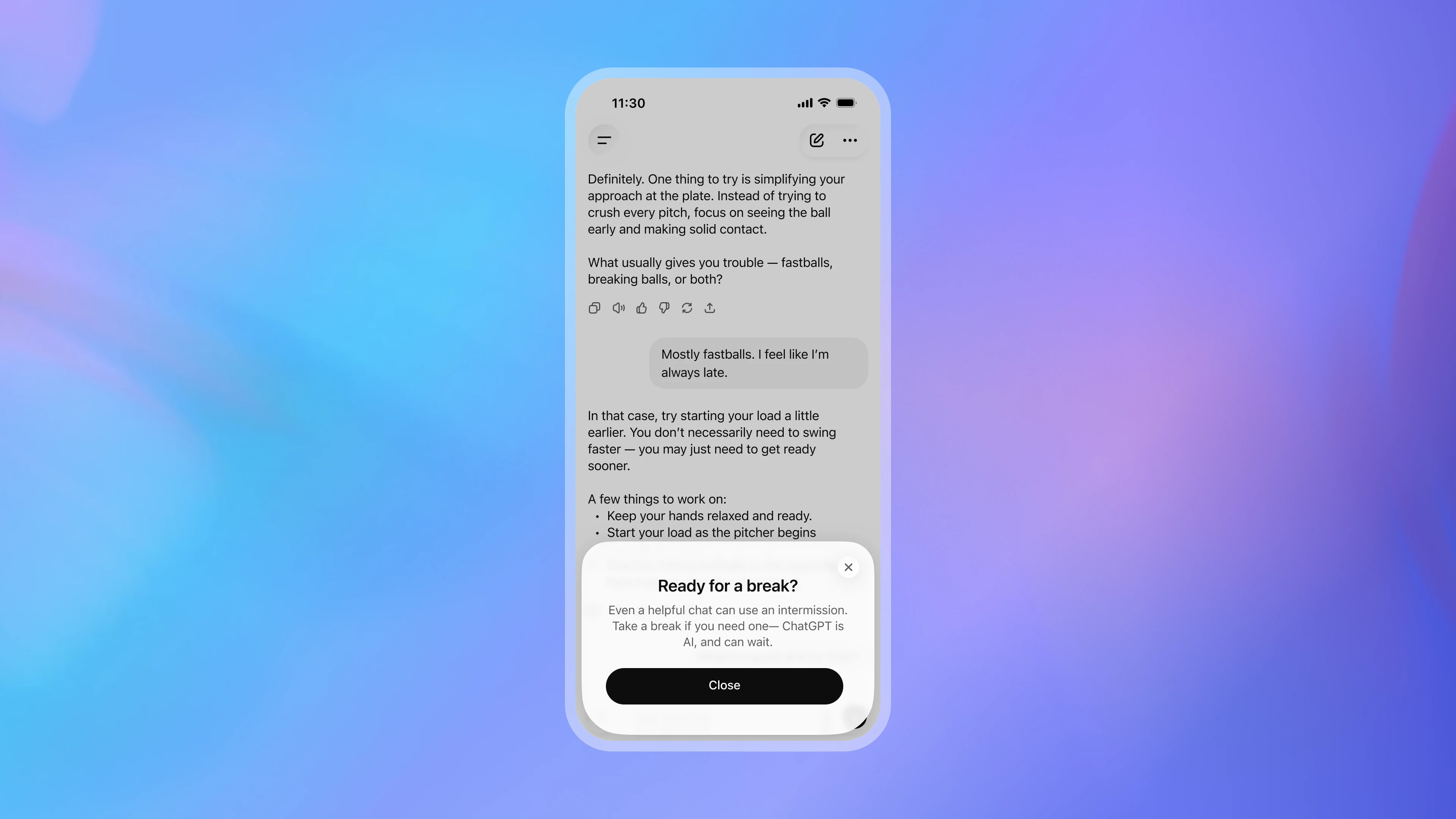
ChatGPT for Teens 包含内置提醒,鼓励青少年休息。平均而言,青少年每天在 ChatGPT 上花费不到 15 分钟。虽然不到 2% 的青少年在 ChatGPT 上连续使用超过三个小时,但在带有休息提醒的青少年对话中,近一半的情况下,青少年会在五分钟内休息或结束对话。这些使用模式仍远低于公开报道(在新窗口中打开)的青少年社交媒体使用平均 5 小时,并反映出一种不同的体验:ChatGPT 是为学习、构建和创造力而设计的,而不是被动滚动浏览。在连续使用超过三个小时的青少年中,超过 80% 至少有一个与学习相关的提示。
这些早期迹象令人鼓舞,我们将继续评估这一体验,并向青少年、家庭和教育工作者学习,以改进 ChatGPT for Teens。
推出 College Planner,帮助青少年为下一步做准备
每周有数十万美国青少年使用 ChatGPT 规划大学。他们用它来规划申请、跟踪截止日期、研究学校并了解经济援助。
这就是为什么我们很快将在 ChatGPT for Teens 中添加 College Planner。我们正在设计它,以帮助学生管理大学申请的实际步骤,同时不取代他们弄清楚自己想申请哪里的个人工作。学生在大学申请方面获得支持的渠道各不相同。我们的目标是让帮助更容易获得,无论经济状况如何,同时配合辅导员、顾问和家庭提供的指导。
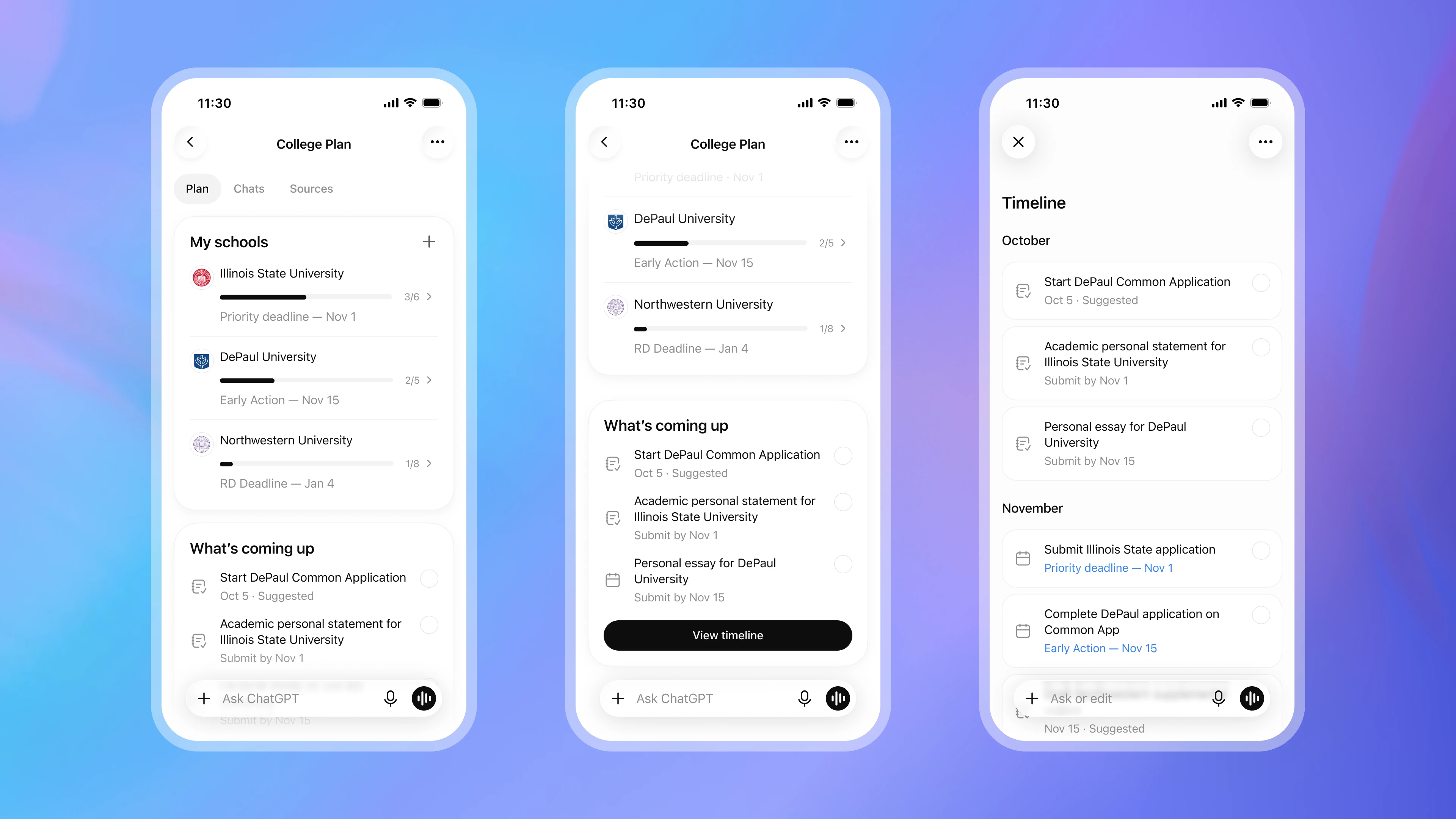
College Planner 将学生名单上学校的申请要求、截止日期、任务和经济援助步骤整合到一个计划中。申请多所大学的学生可以随时返回更新进度,使用时间线提前规划,并查看还剩什么要做。他们还可以在此过程中向 ChatGPT 提问,从某项要求的含义到如何开始。通过将这些步骤整合在一起,我们旨在为学生和家庭节省时间,并让这一压力重重的过程变得更易管理。
我们最初为计划就读四年制大学的 10–12 年级美国高中生设计这一体验。我们计划将 College Planner 带给更多国家的学生,并随着时间推移将支持扩展到两年制学院、技术学院、职业学校等。
College Planner 还帮助学生弄清楚如何支付大学费用。他们可以获得帮助,理解经济援助要求,跟踪每所学校的援助截止日期,并探索奖学金和费用减免。
跟踪申请只是准备大学的一部分。许多学生还需要有人帮助他们理解自己的选择。除了 College Planner,我们还支持 College Advising Corps(在新窗口中打开),这是一家非营利组织,将应届大学毕业生安置为资源不足高中的顾问,帮助学生走上高等教育之路。OpenAI 的捐助将帮助该组织扩展到新的州,并创建一个 AI 奖学金项目。通过该项目,参与各州的顾问将测试并分享使用 AI 帮助更多学生走上大学之路的实用方法。AI 可以帮助学生管理申请和入学任务。顾问可以帮助他们考虑选择并决定下一步做什么。
支持波士顿儿童医院与青少年互动
当我们推出 ChatGPT for Teens 时,我们承诺继续改进这一体验。我们将在未来三年支持波士顿儿童医院的 Digital Wellness Lab(在新窗口中打开)及其独立的Student Advisory Council(在新窗口中打开),直接向年轻人学习 AI 如何融入他们的生活,并让青少年在 AI 设计过程中拥有有意义的发言权。
在 2026–27 学年,该 Lab 将汇集约 22 名学生,分为两个方向:约 12 名 14–18 岁的学生在其社区开展数字福祉项目,约 10 名 16–20 岁的学生专注于构建 AI 聊天机器人和新兴技术。这些学生将与研究人员和临床医生一起开展数字福祉和 AI 项目。AI 方向的学生将测试工具,并根据他们在学习和个人生活中使用 AI 的方式提出修改建议。我们预计将就青少年安全默认设置、家长控制和通知以及 AI 素养征求反馈。
青少年应在开发塑造其未来的工具中发挥核心作用。青少年将测试工具,并为构建这些工具的人提出建议。我们的目标是尽早将这些建议纳入产品和模型决策,并向学生反馈我们做了哪些改变以及原因。该顾问委员会将让他们在这项工作中拥有直接发言权,并分享他们的见解和建议,以帮助更广泛的行业为年轻人构建更好的工具。
青少年用抽认卡和测验学习的更多方式
我们从学生那里听说,拍摄笔记并上传到 ChatGPT 可能要花上几个小时。我们正在让学生更容易将笔记转化为学习材料,如抽认卡和测验。
通过连续、多张照片拍摄,学生可以拍摄多页笔记,并自动将它们合并为一个 PDF,随时可上传到 ChatGPT。此功能已在 iOS 上提供,我们正在努力将其带到 Android。
我们还在添加抽认卡,帮助青少年练习他们正在学习的内容。例如,一名准备生物考试的学生可以上传课堂笔记或选择一个主题,ChatGPT 可以将这些材料转化为卡片以供复习。他们可以标记自己已经掌握的卡片,回到答错的卡片,或打乱牌组再来一轮。牌组会保存在青少年的资料库中,因此很容易从上次停下的地方继续。学生还可以让 ChatGPT 调出抽认卡,并创建一个计划任务来练习它们。
除了抽认卡,我们还让在 ChatGPT 中创建测验变得更容易。学生现在可以上传笔记,将其转化为互动测验,而 ChatGPT 也更能识别你何时想要测验,并直接在聊天中创建一个。
我们将继续向青少年、家庭和教育工作者学习,检查这些保护措施在实践中的效果,并随着 ChatGPT for Teens 的发展分享我们学到的东西。
Since we introduced ChatGPT for Teens—the default experience automatically applied to accounts identified as under 18—we’ve seen young people use it to learn, explore ideas and solve everyday problems. Today, we’re sharing early progress on ChatGPT for Teens, including how teens are using its learning tools, along with new ways for teens to study and prepare for college.
ChatGPT’s 1.2 billion users span many countries, communities and backgrounds. That reach makes it especially important to build tools that help young people with different resources and opportunities learn and prepare for their futures.
What we’re seeing so far
ChatGPT for Teens is designed to help young people learn, think critically and deepen their understanding. As ChatGPT for Teens became available to more teens globally, those with access sent about 2.7 million more learning-related messages on average than those who didn’t have it yet.
Once enrolled, teens use ChatGPT for Teens’ learning tools at scale. The most selected conversation starter prompts are “ask questions to develop my ideas,” “give feedback on my draft,” and “help me check my evidence.” In one week, nearly 1.2 million teens used Learning Visualizations to better understand math and science concepts, and more than 180,000 used Study Mode for step-by-step learning support.
ChatGPT for Teens includes built-in reminders to encourage teens to take breaks. On average, teens spend under 15 minutes a day on ChatGPT. While less than 2% of teens spend more than three consecutive hours on ChatGPT, in almost half of teen conversations with a break reminder, teens took a break or ended their conversation within five minutes. These usage patterns remain well below the publicly reported(opens in a new window) average of 5 hours for teen social media usage, and reflect a different kind of experience: ChatGPT is designed for learning, building, and creativity, rather than passive scrolling. Among teens with sessions longer than three consecutive hours, over 80% had at least one prompt related to learning.
These early signs are encouraging and we’ll continue to evaluate the experience and learn from teens, families and educators to improve ChatGPT for Teens.
Introducing College Planner to help teens prepare for what’s next
Hundreds of thousands of US teens use ChatGPT each week to plan for college. They’re using it to plan applications, track deadlines, research schools and understand financial aid.
That’s why we’ll soon be adding College Planner to ChatGPT for Teens. We’re designing it to help students manage the practical steps of applying to college, without taking over the personal work of figuring out where they want to apply. Students have different levels of access to support with college applications. Our goal is to make help more accessible, regardless of financial circumstances, alongside guidance from counselors, advisers, and families.
College Planner brings together application requirements, deadlines, tasks, and financial-aid steps for schools on a student’s list in one plan. Students applying to several colleges can return to it to update their progress, use the timeline to plan ahead and see what’s left to do. They can also ask ChatGPT questions along the way, from what a requirement means to how to get started. By bringing these steps together, we aim to save students and families time and make a stressful process feel more manageable.
We’re designing the initial US experience for high-school students in grades 10–12 who are planning to attend a four-year college. We plan to bring College Planner to students in more countries and expand support to two-year colleges, technical colleges, trade schools and more over time.
College Planner also helps students figure out how to pay for college. They can get help understanding financial aid requirements, track each school’s aid deadlines, and explore scholarships and fee waivers.
Keeping track of an application is only one part of preparing for college. Many students also need someone to help them make sense of their options. Alongside College Planner, we’re supporting College Advising Corps(opens in a new window), a nonprofit that places recent college graduates as advisers in under-resourced high schools to help students navigate the path to higher education. OpenAI’s contribution will help the organization expand into new states and create an AI fellowship program. Through the fellowship, advisers across participating states will test and share practical ways to use AI to help more students navigate the path to college. AI can help students manage application and enrollment tasks. Advisers can help them consider their options and decide what to do next.
Supporting Boston Children’s Hospital to engage teens
When weintroduced ChatGPT for Teens, we committed to keep improving the experience. We’re supportingBoston Children’s Hospital’s Digital Wellness Lab(opens in a new window) and its independentStudent Advisory Council(opens in a new window) over the next three years to learn directly from young people about how AI fits into their lives and to give teenagers a meaningful stake at the table as AI is being designed.
For the 2026–27 school year, the Lab will bring together ~22 students across two tracks: ~12 students ages 14–18 working on digital wellbeing projects in their communities and ~10 students ages 16–20, focused on building AI chatbots and emerging technology. These students will work alongside researchers and clinicians on digital wellbeing and AI projects. Students in the AI track will test tools and recommend changes based on how they use AI in learning and their personal lives. We expect to seek feedback on teen safety defaults, parental controls and notifications and AI literacy.
Teens should play a central role in developing the tools that will shape their future. Teens will test tools and develop recommendations for the people building them. Our aim is to bring those recommendations into product and model decisions early and to report back to students on what we change and why. This advisory board will give them a direct voice in that work and share their insights and recommendations to help the wider industry build better tools for young people.
More ways for teens to study with flashcards and quizzes
We heard from students that photographing and uploading their notes to ChatGPT can take hours. We’re making it easier for students to turn their notes into study materials like flashcards and quizzes.
With continuous, multi-photo capture, students can photograph multiple pages of notes and automatically combine them into a single PDF, ready to upload to ChatGPT. This is available on iOS, and we’re working to bring it to Android.
We’re also adding flashcards to help teens practice what they’re learning. A student preparing for a biology test, for example, can upload class notes or choose a topic, and ChatGPT can turn the material into cards to review. They can mark the cards they know, return to the ones they missed or shuffle the deck for another round. Decks are saved in a teen’s Library, so it’s easy to pick up where they left off. Students can also ask ChatGPT to pull up the flashcards and create a scheduled task to practice them.
Alongside flashcards, we’ve made it easier to create Quizzes in ChatGPT. Students can now upload their notes to turn them into interactive quizzes, and ChatGPT is better at recognizing when you want a quiz and creating one directly in chat.
We’ll keep learning from teens, families and educators, checking how protections work in practice and sharing what we learn as ChatGPT for Teens evolves.
本文内容采集自官方网站,排版和翻译可能与原页面存在差异。
阅读官方全文